
To remember more of what you read, do less while you are reading and return to your own thoughts more deliberately afterward. A useful system needs only a few prompts: what changed, what surprised you, what you want to revisit, and who you might recommend the book to.
Why books fade so quickly
Forgetting is not proof that reading failed. A book competes with conversations, work, notifications, sleep, and every other story you encounter. If you move straight from the final page to the next demand of the day, your memory may keep only a mood or a single image. That is normal. The practical goal is not to preserve every detail; it is to keep enough structure that the book remains available to you later.
Remembering also depends on attention. A book read in ten scattered fragments may still matter, but the connections may be harder to retrieve. Instead of blaming yourself for interrupted reading, create small return points. A note at the end of a chapter can make the next session feel like continuation rather than restart.

Use a four-question note
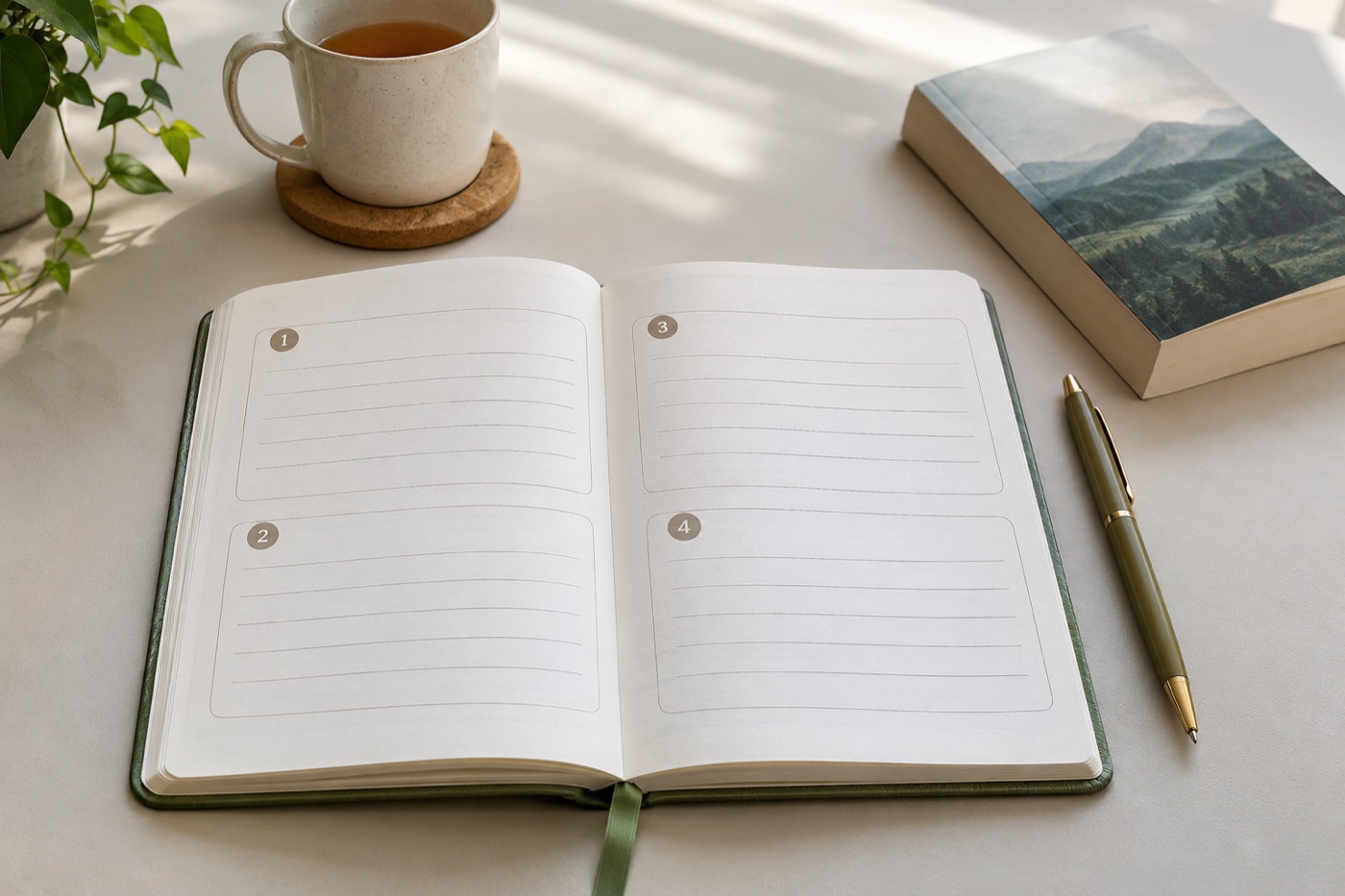
At the end of a reading session, answer four questions in one or two sentences each: What happened? What changed? What did I notice? What do I want to ask next? The first two preserve the thread. The third captures your personal response. The fourth gives your future self a reason to return.
You can write these notes on paper, in a book journal, or in a simple digital document. The format matters less than the timing. A short note made while the scene or argument is still present is more useful than a perfect summary attempted weeks later.
Avoid turning the note into a transcript. You do not need to record every character, claim, or quotation. Choose the details that help you reconstruct your experience. A future note such as “the middle section changed how I understood the narrator” is often more valuable than a page of plot recap.
Mark ideas, not every sentence
Highlighting can support memory when it marks a real turning point. If every page is marked, nothing has priority. Use one mark for a sentence you want to revisit and a different mark for a question or disagreement. The goal is to create a small map, not to decorate the entire book with equal emphasis.
For print books, a pencil or removable tab keeps the process low-pressure. For ebooks, use a small number of highlights and add a note in your own words. For audio, capture a timestamp and a short phrase after the listening session rather than pausing every few minutes.
If you share quotations, keep the quotation short and name the context. A line removed from its surrounding argument can become misleading. Your note should preserve why the passage mattered, not only the words themselves.

Build a return loop
One week after finishing a book, write a five-line recap without looking at your notes. Then compare it with the notes you made while reading. The gaps are useful: they show what your mind kept, what it released, and which ideas need a second look.
One month later, revisit only your strongest mark or question. You may not need to reread the whole book. A single page, scene, or argument can reactivate the broader experience. This is especially helpful for books you want to discuss, recommend, or connect to another topic.
Keep a “books I might recommend” list with a reason attached to each title. “Good” is hard to retrieve. “For someone who wants a quiet mystery with a strange setting” is specific enough to become useful later.

A lightweight system for different formats
For print, keep a bookmark with four small prompts on the back. For ebooks, use the built-in notes sparingly and export or revisit them if the platform allows it. For audio, make one note at the end of each listening block. For book clubs, write one passage, one question, and one point of disagreement before the meeting.
The system should adapt to the book. A novel may need character and mood notes; a practical book may need actions and examples; a poetry collection may need images and sounds. Do not force every kind of reading into the same spreadsheet.
What not to measure
Pages per day, streak length, and total books can be motivating for some readers, but they are weak measures of memory. A slower book may produce more lasting thought than a fast one. A reread may deepen your understanding without increasing your yearly count.
Use tracking to support attention, not to create a second performance task. If your reading log makes you avoid reading, simplify it. A date, title, and one sentence can be enough.
Use the system with a real book
Suppose you read a chapter during lunch. Before closing the book, write one sentence about what changed and one question you still have. The note may take less than a minute. When you return that evening, read the note before opening the next page. You have created a bridge between sessions, so the book does not need to fight its way back into attention from zero.
For a nonfiction book, the same system can be more concrete. Write the main idea in your own words, then add one example and one situation where the idea might be useful. If the idea does not seem useful, write why. Disagreement is a memory aid because it gives the book a place in your own thinking rather than leaving it as someone else’s information.
For a novel, focus on movement rather than inventory. What did a character want? What changed the balance between two people? What image or setting kept returning? These prompts preserve the shape of the story without turning reading into a test. They also create better conversation prompts later.
A reading note is allowed to be provisional. You may misunderstand a scene or change your mind about an argument. Do not edit the note until it sounds polished. Keeping the first reaction visible can show you how the book worked on you before interpretation arrived.
If you are reading for a class, project, or club, separate required notes from personal notes. Required notes answer the assignment. Personal notes answer what you noticed. Keeping both visible prevents the book from becoming only a task and makes later discussion more honest.
A note should lead back to the book
When you revisit a note, do not ask whether it is complete. Ask whether it opens the book again. A phrase that brings back a room, a character, or a question is doing its job. If the note feels flat, add one sensory or emotional detail: where you were reading, what surprised you, or what you resisted. Memory becomes easier when the record has a personal anchor.
For books you plan to recommend, write the recommendation for a specific reader rather than for an imaginary public. “Read this if you want a layered family story with a steady pace” is more useful than “This is a must-read.” Specificity preserves the conditions in which your memory is accurate.
If you read several books on the same subject, compare them in a small grid: shared question, different answer, strongest example, and remaining uncertainty. Comparison can reveal patterns that a single summary hides, but keep the books distinct. Similar subject does not mean identical argument.
A reread does not have to begin at page one. Return to the opening, the passage you marked, or the moment that changed your view. Then decide whether the whole book is calling you back. Targeted rereading respects limited time and often produces a clearer second encounter.
The simplest durable archive is a list of titles with one honest sentence each. You can add more later. Start with the sentences you would want to read before recommending, rereading, or discussing the book.
A useful final prompt
When you close the book, finish this sentence: “I will remember this because…” The answer may be a feeling, an image, a question, or a disagreement. That sentence turns the end of reading into a small act of retrieval. It also gives you a natural opening if you return to the book months later.
Do not wait for the perfect system. Start with the next session and one honest line. A record that grows slowly is more valuable than a complex template you avoid.
Remember the reader you were
A note can also preserve the conditions around a book. Write where you were, what season of life you were in, or what question brought you to the title. This context helps explain why the book mattered then, even if your response changes later. Memory is not only content; it is relationship.
When a book becomes part of a conversation, add the other person’s insight to your record. A different reading can bring a forgotten detail back into view and make your own response more precise.
The archive should serve future curiosity. Keep it searchable, simple, and personal enough that you will want to open it again.
Tools that help memory stay light
The goal is not to build a perfect archive. These optional physical tools can make the tiny actions in this system easier: one short note, a limited mark, or a visible return point. Choose one only if it lowers friction for you.

Clever Fox Reading Journal
The current listing describes a 5.8 × 8.3-inch reading journal and book-tracking log. Use it for the four-question note, not a transcript of every page.
View on Amazon ↗
Post-it page flags
The current listing describes multicolor 0.47 × 1.7-inch flags with one dispenser and 320 flags. Use a small color code for passages you may revisit.
View on Amazon ↗
Pilot FriXion erasable highlighters
The current listing describes chisel-tip erasable highlighters with assorted color inks in a 5-pack. Test any marker on the page first and keep emphasis selective.
View on Amazon ↗These are editorially selected examples, not universal recommendations. Re-check the live listing before buying.
Frequently asked questions
Do I need to take notes while reading?
No. A short note after a chapter or session is often enough, and some books are better experienced without interruption.
How can I remember a novel’s plot?
Write a brief recap at natural stopping points and record what changed, not every event.
Is highlighting useful?
It can be, when you mark only turning points, questions, and passages you genuinely want to revisit.
What is the best reading journal format?
The best format is the one you will use. Paper, digital notes, or a simple document can all work.
How do I remember nonfiction?
Record the main idea, one example, one question, and one action you might test.
Should I reread books to remember them?
A targeted reread of a key chapter or passage can refresh memory without requiring the entire book again.
Should I take notes while reading?
Only if notes help you notice, remember, or return to ideas; they should support reading rather than interrupt every page.
How often should I review notes?
A short revisit after finishing a section or book is often enough to reconnect with the main ideas.
What if I remember feelings more than facts?
That still counts. Record the atmosphere, question, or change in perspective the book left with you.
Can simple highlights help?
Yes, if they stay selective and are paired with a short phrase about why the passage mattered.
Key takeaways
- One honest line is better than a perfect transcript.
- Mark turning points, questions, and passages you want to revisit.
- Return to notes after a week or month to reactivate the book.
- Let the system adapt to print, ebook, audio, and your attention.
Useful Sources And Verification
This guide is original editorial guidance. For broader library and reading resources, verify details through Library of Congress, American Library Association, and New York Public Library. Books Club does not claim firsthand testing unless a page states it clearly.