
Choose a reading light by where it sits, how the light reaches the page, how much control you need, and whether it disturbs anyone else. Beam direction, brightness control, color temperature, stability, and power matter more than a decorative shape alone.

Start with the room, not the lamp
A light that works on a desk may be awkward beside a bed. A clip light can solve a narrow reading spot but create cable or shadow problems elsewhere. Describe the chair, table, wall, outlet, and other people in the room before choosing a fixture. The goal is a clear page with comfortable surroundings, not maximum brightness everywhere.
Look at the existing ambient light too. A reading light may need to add gentle focus rather than overpower the room.
Compare the main reading-light decisions
Beam direction is the quiet variable
Good reading light reaches the page without shining directly into your eyes or across another person’s face. Look for a shade, neck, arm, or head that lets you aim the light. A wide beam can illuminate more of a spread, while a narrow beam may create stronger contrast and darker edges.
Check the angle from your normal reading position. A lamp that looks well aimed while standing may create glare once you sit or recline.
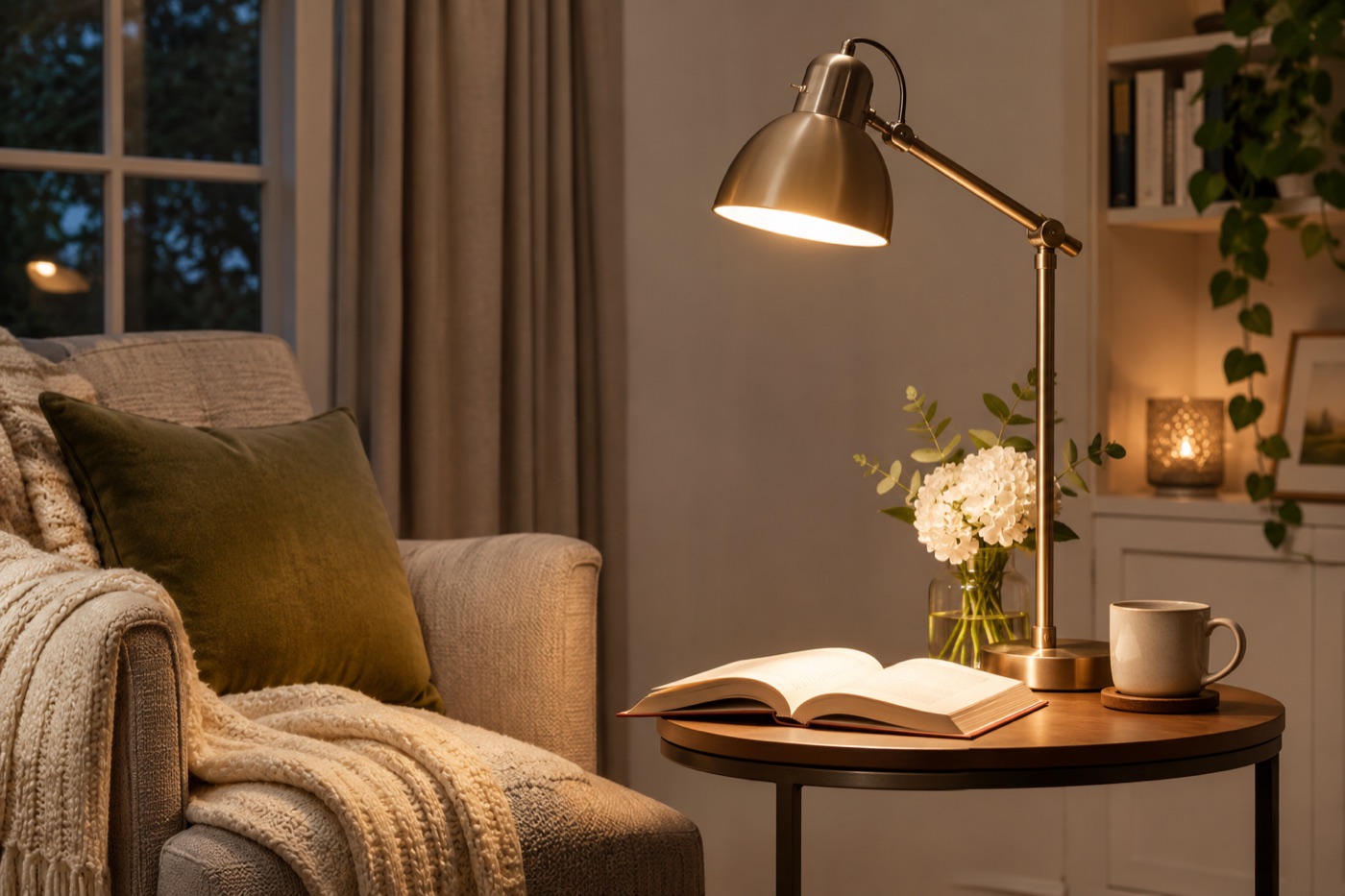
Brightness and color controls
More brightness is not always more comfortable. Adjustable output can help you move from daytime to evening without changing the whole room. Color temperature preferences vary, and the most comfortable setting depends on the page, the surrounding light, and the reader. Treat manufacturer descriptions as specifications to verify, not a promise that one setting will suit everyone.
Controls should be easy to reach without interrupting the reading. A beautiful light with a confusing switch creates unnecessary friction.
Choose the placement that survives real life
A bedside light needs to stay stable when the book, water glass, and phone share the surface. A clip light needs a compatible edge and enough grip. A wall-mounted light needs permission, tools, and a safe cable route. A portable light needs charging access and a place to rest when not in use.
Measure before buying. Note the distance from the lamp to the page, the width of the surface, and the location of the outlet. A small measurement can prevent a large mismatch.
Heat, glare, and visual comfort
Pay attention to heat, reflections, glossy pages, screens nearby, and the contrast between the page and the room. If the light creates a bright hotspot, move the beam or soften it rather than simply turning it higher. For shared rooms, control spill at the source.
If reading causes discomfort, consider the whole setup and consult appropriate professional advice when needed. A lamp is one part of visual comfort, not a medical solution.

Power, controls, and maintenance
Check whether the light uses a replaceable bulb, an integrated light source, batteries, or a rechargeable system. Each choice changes maintenance and failure points. Verify the current instructions, charging method, cable length, and any replacement path before buying.
Keep cords away from walking routes and heat sources. Follow the manufacturer’s instructions for placement, cleaning, and electrical use.
For a shared bedroom or living room
Shared spaces need boundaries. A directional lamp, a lower setting, a shade, or a clip placed close to the book can let one person read without turning the room into a second daytime. Discuss the setup with the other person rather than treating their comfort as an afterthought.
Sometimes the best solution is a small personal light paired with low ambient lighting. Sometimes it is moving the chair. Choose the arrangement, not just the fixture.
Frequently asked questions
What makes a good reading light?
Controlled direction, comfortable brightness, stable placement, easy controls, and a setup that does not disturb the room.
Is brighter always better?
No. Brightness, glare, beam direction, page reflection, and surrounding light all affect comfort.
What is best for a shared room?
Look for low spill, dimming, and a beam that can stay close to the page.
Clip light or table lamp?
Choose based on the surface, clearance, cord route, and whether the light needs to move.
Should I choose warm or cool light?
Preferences vary. Verify the current controls and choose the setting comfortable for your space and eyes.
What should I measure first?
Measure the reading surface, chair or bed position, outlet distance, clearance, and the beam’s likely path.
Make the light fit the reading habit
Before buying, write down the location, reader position, desired beam, control needs, power route, and any shared-room constraint. Then verify the current dimensions, specifications, safety guidance, warranty, and return policy. A reading light succeeds when it becomes part of the room without demanding attention.
The right choice is not the brightest or most decorative lamp. It is the one that keeps the page clear and the space livable.
Useful Sources And Verification
Let the setup support the room
Test the light where you actually read, at the time you actually read, with the page and the people who share the space in mind. Adjust direction and output before buying more power. A good setup keeps the text clear, the room comfortable, and the controls easy.
If it does that quietly, it has done enough.
Measure the surface, reach, cable, and beam before you buy. The right light is the one that works in the room, not only in a product photograph.
That is enough: clear text, comfortable control, and a room that still feels like home.
Choose a light that suits the chair, page, room, and people around you. The right light does not need spectacle; it needs dependable direction and comfortable control.
Keep the decision grounded in use
Before you commit, compare the choice with the place, time, and attention you actually have. A journal should be easy to reopen. A bookmark should stay gentle and findable. An e-reader should solve a real access or portability problem. A reading light should clarify the page without taking over the room.
Start small, verify the current details, and let real use teach you what to change. The best reading-life tools are not the most complicated ones. They are the ones that quietly make returning to a book easier.
Leave room for change
Reading habits shift with work, travel, health, space, and mood. Choose a setup that can adapt instead of forcing you to preserve one perfect routine. If a tool adds friction, change the tool, the placement, or the expectation. A flexible reading life is not a weaker one; it is more likely to last.
Use this guide as a decision aid, not a rulebook. The final test is simple: does the choice help you return to the page with less resistance and more comfort?
Verify current dimensions, light settings, power requirements, safety guidance, warranty, price, and availability through the manufacturer page and a trusted retailer. For electrical or efficiency claims, consult the relevant official consumer-safety and energy guidance for your region. This guide does not claim firsthand product testing.
ENERGY STAR · U.S. Consumer Product Safety Commission · New York Public Library
Choose the light’s relationship with the page
Look at where the beam lands, whether the page reflects it, and whether the surrounding area becomes too dark by comparison. A comfortable setup often uses modest focused light with enough ambient light to keep the room legible. The page should stand out without becoming a bright island.
Consider the reader’s posture
A lamp’s ideal position changes when you sit upright, recline, or read on your side. Check whether the neck or shade can move with you. If the lamp only works in one posture, it may become frustrating even if its specifications look strong.
Plan for the cable and switch
A cable across a walkway or a switch behind furniture creates avoidable friction. Trace the cable route before buying and decide whether you need a reachable switch, inline control, or rechargeable option. Small placement details often determine whether the light becomes part of the habit.
Keep the room’s visual balance
A reading light can support the room rather than dominate it. Consider scale, shade, finish, and how the fixture looks when it is off. A smaller directional light may be better than a large decorative lamp if the reading corner already has strong visual elements.
Use a lower setting first
Start with the lowest comfortable output and increase it only when the page needs more clarity. This can reduce glare, preserve the room’s atmosphere, and make shared reading easier. If the page still feels difficult, adjust direction and ambient light before assuming brightness is the answer.
Review the setup after a week
Use the light in the actual place and posture where you read. Notice heat, reflections, switch access, cable movement, and whether another person is disturbed. A short real-life review is more useful than choosing from appearance alone. Keep the light if it disappears into the habit; change the setup if it keeps calling attention to itself.
Choose for the page size you read
A small paperback, a large hardcover, a magazine, and a notebook can need different beam coverage. Aim for enough spread to see the page without creating a harsh hotspot. If you read varied formats, choose adjustability over a fixed narrow beam.
Think about maintenance
Dust, loose joints, worn cables, depleted batteries, and hard-to-reach controls can change a light’s usefulness. Keep the setup clean and follow the maker’s instructions. If a component becomes unreliable, replace it rather than improvising an unsafe repair.
Make the light easy to ignore
The ideal reading light does not become the subject of the evening. It gives the page enough clarity, respects the room, and remains simple to control. If you keep noticing glare, heat, shadows, or a difficult switch, treat those observations as evidence that the setup needs adjustment.
Check the light from the page’s point of view
Sit where you actually read and look at the page, not the lamp. Move the fixture until the text is even, the shadows are manageable, and the surrounding room still feels comfortable. This practical test can reveal more than a product description.
Keep shared comfort in the decision
If another person sleeps, watches, works, or rests nearby, include their experience from the beginning. Direction, dimming, and placement can protect both readers. A good setup is one that supports your habit without turning the room into a negotiation every night.
Let the room remain a room
A reading corner should still work when the book is closed. Choose a light that fits the furniture, keeps pathways clear, and does not require a complicated reset. The most successful setup supports reading while preserving the room’s other uses.
Check the setup at the time you use it
Evening shadows, daylight, and a different chair can change the result. Test the light in the real time and position of reading. If the page is clear and the room remains comfortable, the setup is doing its job.
Choose control over spectacle
A light can be beautiful, but control is what makes it useful. Prefer a fixture you can aim, dim, switch, and maintain without interrupting the reading session.
Make the next action clear
Write down the problem you want to solve, the feature or format that matters, and the condition that could make the choice wrong. Then take one small action: borrow a sample, measure the space, check the current specification, open the journal, or place the bookmark where you will use it. Practical guidance becomes useful when it ends in something you can do.
Review the choice after real use. If the tool creates friction, change the tool or the setup. You do not need to defend a purchase, a system, or a habit that no longer supports your reading life.
Let the tool disappear into the habit
The reading life is larger than any accessory or device. Choose the option that reduces friction, respects your space, and leaves your attention available for the book. If the object keeps demanding attention, treat that as useful evidence and adjust the setup.
A good choice remains flexible. It can support a busy week, a slower season, a shared room, a new format, or a change in the way you remember what you read. That flexibility is part of the value.
Check the fit before you commit
Before buying or building a system, verify the current details and compare them with your real reading conditions. The smallest useful choice is often better than an impressive but complicated one. Keep a backup plan, allow the setup to change, and let actual use guide the next decision.
Choose with the room in mind
If the light improves the page without disturbing the room, it is doing enough. Keep the setup simple and adjustable.
That is the practical test: clear pages, comfortable control, and a room that still works.