
A good reading corner does not require a spare room. It needs a dependable place to sit, light that makes the page easy to see, a surface for the book you are using, and enough order that beginning feels simple. In a small space, the best setup is usually the one that can disappear or serve more than one purpose.
Start with the spot you already use
Look for the place where you naturally pause: the end of a sofa, a bedroom corner, a dining chair, or the edge of a window. A reading corner works better when it fits an existing routine than when it asks you to cross the whole home to reach it.
Check the surrounding movement. A beautiful chair placed in a walkway may become irritating. A small corner beside a table may be more useful than a larger area that needs to be reset every time. Measure the chair, the lamp reach, and the space needed to stand up before buying anything.
Choose a spot with a clear boundary. A wall, rug, side table, or focused light can tell your attention that this is a reading place, even when the room has other jobs.
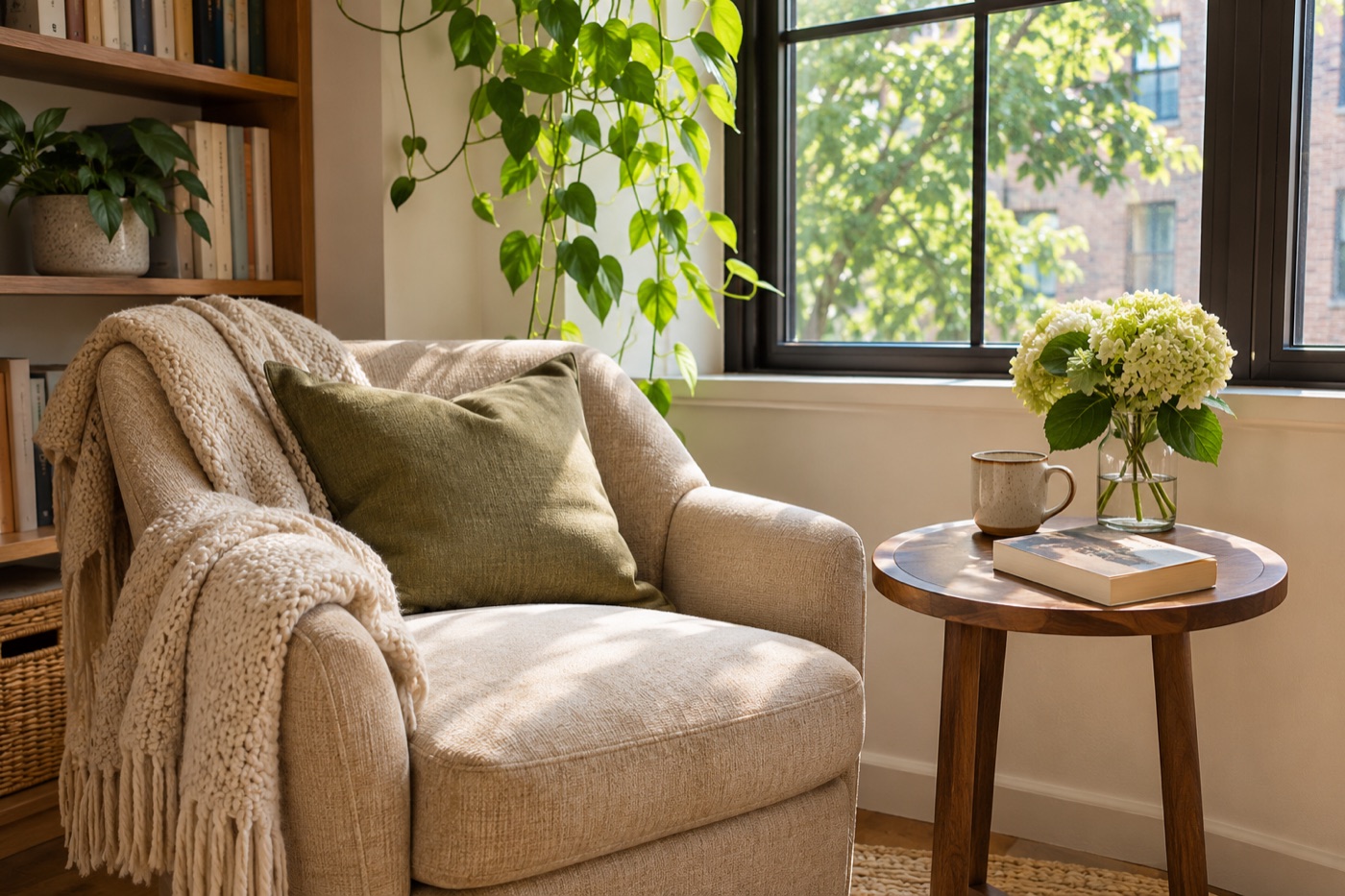
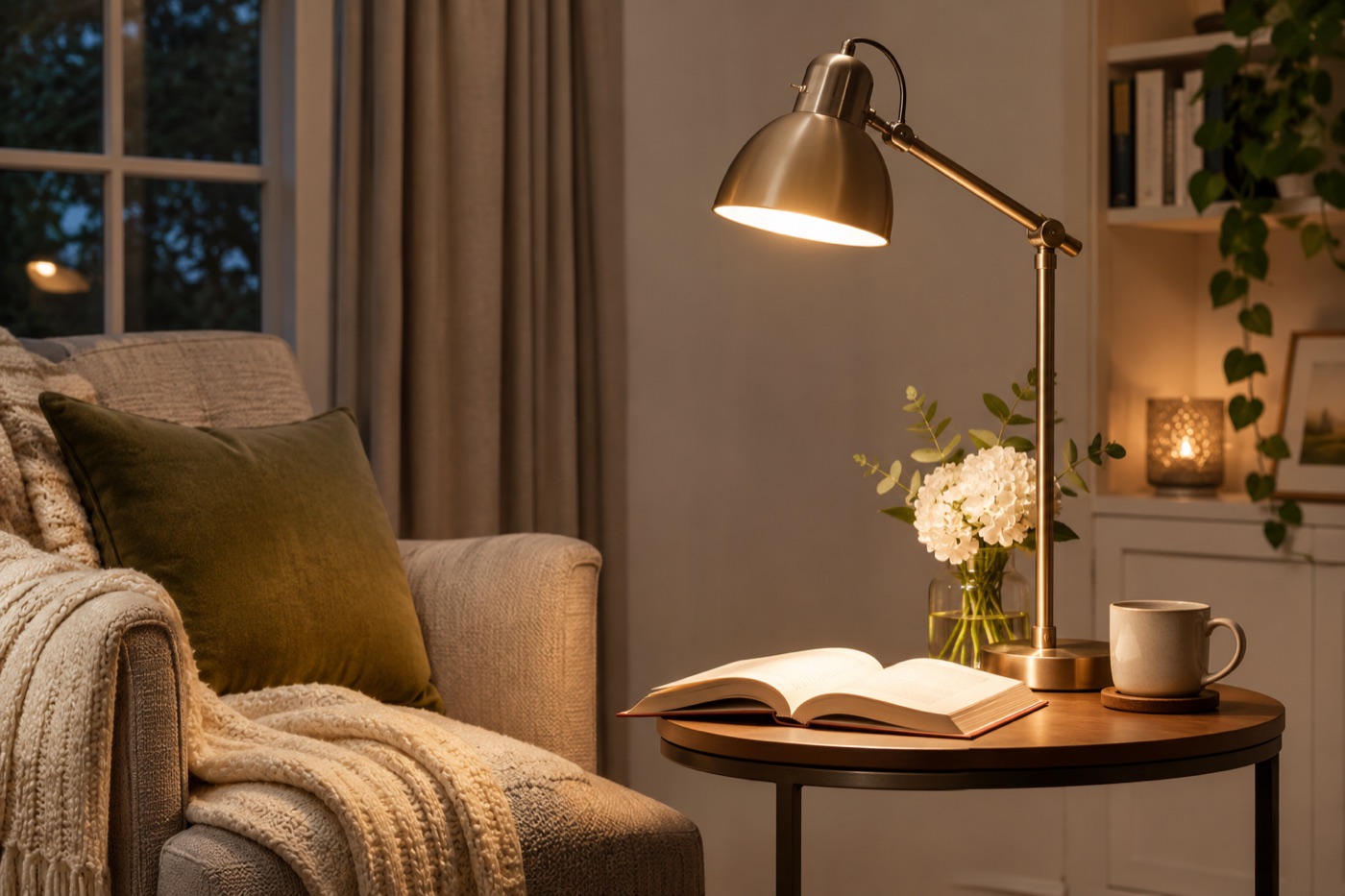
Make light the first investment
Page comfort comes before decoration. Look for a light that reaches the page without shining directly into your eyes or lighting the entire room. A flexible neck, stable base, and easy control usually matter more than a dramatic shape.
Layer the light when possible. A softer room light reduces the contrast between a bright page and a dark background, while a focused reading light handles the page itself. If you read from a screen, pay attention to glare and reflections as well as brightness.
Place the light slightly to the side rather than directly behind your head. The exact position depends on whether you are right- or left-handed and whether the page or screen reflects light, so test the setup with the material you actually read.
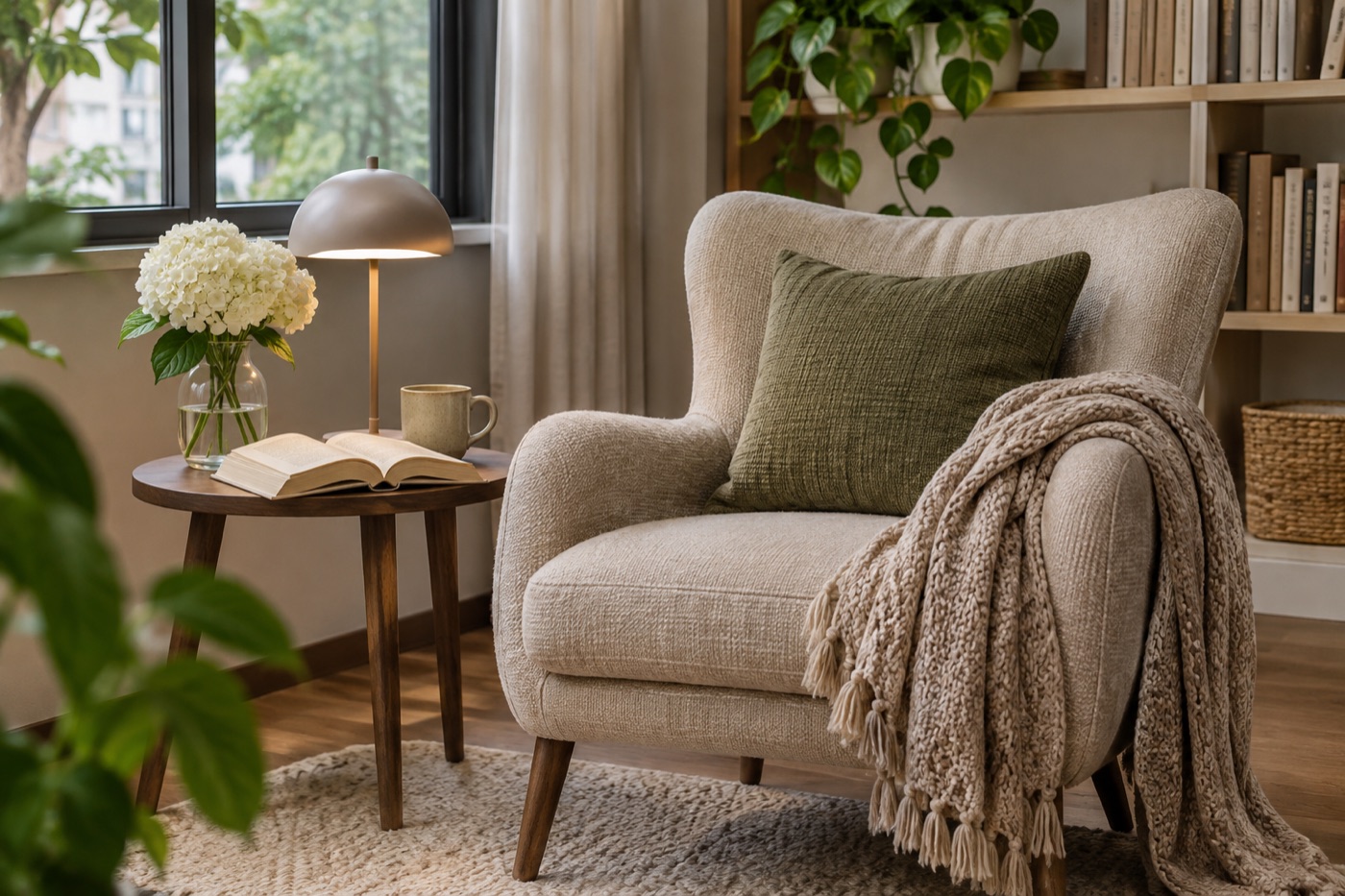
Choose support for the way you sit
You do not need a dedicated reading chair. You do need support that lets you stay still without constantly adjusting. If you read on a sofa, a firm cushion or small pillow can support the lower back or elbow. If you read in bed, protect your neck from folding forward for long periods.
Consider the height of the seat, the place where your feet rest, and whether you can change position. Reading comfort is not a contest to remain perfectly still. A setup that allows small adjustments is usually kinder than one that locks you into a single posture.
Keep the book at a comfortable distance. If you are leaning forward to see the page, change the light, the support, or the text size before blaming your attention.
Use small-space storage deliberately
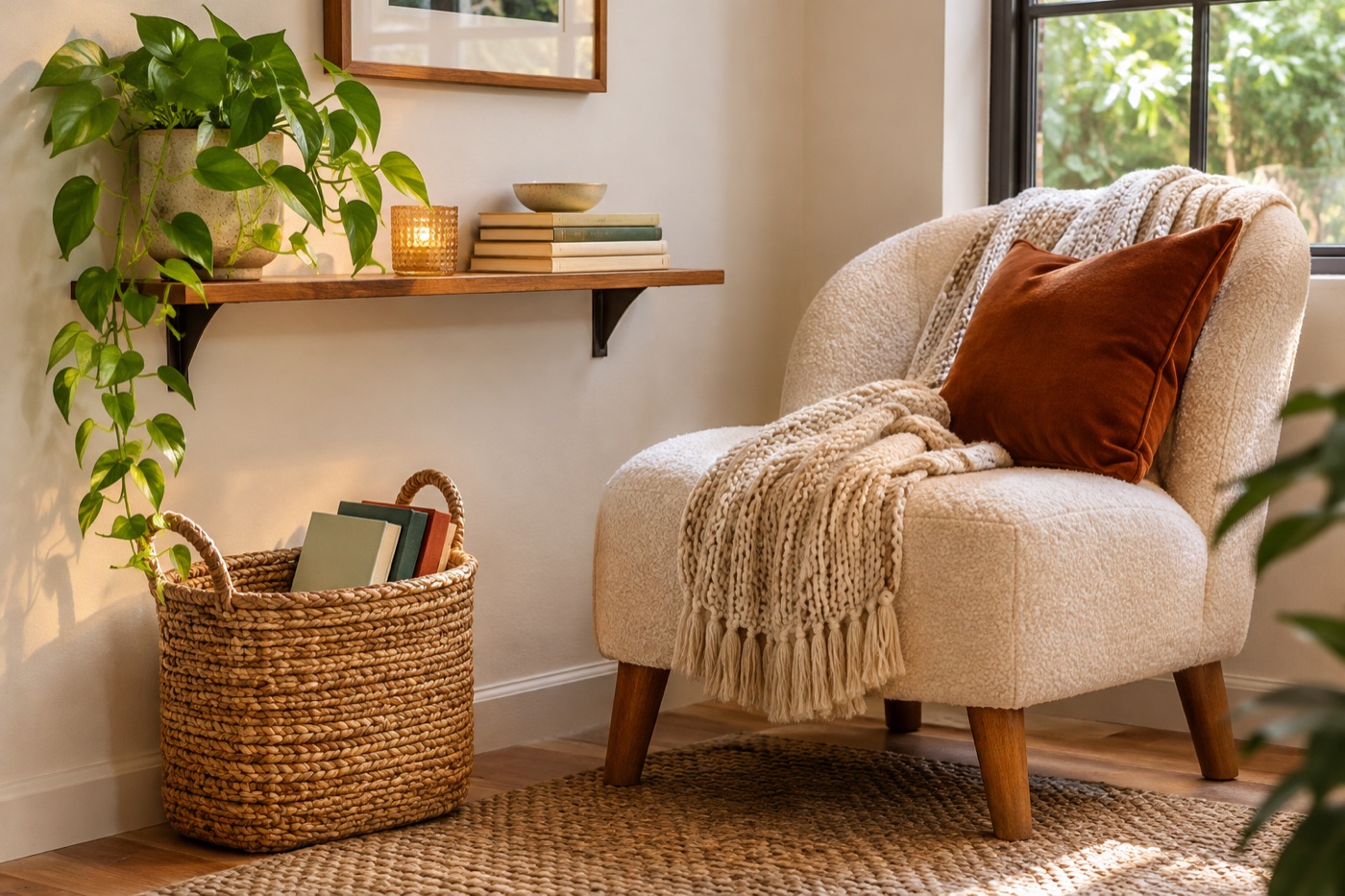
Keep only current and next-up books within reach. A narrow shelf, a basket, or one section of a side table can become a visible reading queue without turning the room into a storage problem.
Use vertical space when the floor is limited, but secure shelves and avoid placing heavy objects where they can fall. If your home is shared, give the reading corner a clear boundary so books do not become part of the household’s general surface clutter.
A small tray can hold a book, bookmark, reading glasses, and a notebook. The tray is useful because it lets the reading setup move when the room needs to change jobs.
Design for the moment before reading
Many reading corners fail before the first page because the setup is difficult to begin. Keep the next book visible. Place the bookmark where you can find it. Make the light switch reachable. If you use an e-reader, keep the charger nearby without creating a cable trap.
Create one small ritual that signals the transition: dim the overhead light, make tea, put the phone out of reach, or write the starting page on a note. The ritual should be short enough that it helps rather than becomes a performance.
If the space is shared, create a reset rule. At the end of a session, return the book and light to their places so the corner is ready for the next use.
A small-space checklist
Before you call the corner finished, sit there for fifteen minutes with the book you actually read. Check whether the page is evenly lit, whether your shoulders relax, whether the surface is large enough, and whether you can leave the setup without blocking the room.
Notice the sound and temperature. A corner beside a television, draft, or busy doorway may need a small adjustment. You can change the chair angle, add a textile, move the lamp, or choose a quieter time. Good design is a series of small corrections, not a single shopping trip.
Keep the setup honest. If you only read in short bursts, design for short bursts. If you read on the floor, support that position instead of building a picture of a reading life you do not use.
Design for changing rooms and changing days
A small reading corner often has to share its space with work, sleep, meals, or family life. Make the setup modular. A lamp that can move, a tray that can be lifted, and a cushion that can return to another chair are often more useful than furniture that only serves one purpose. The goal is not to mark territory permanently; it is to make reading easy when the room changes jobs.
Think about the transition into the corner. If the light requires a hidden switch, the book is stored in another room, and the seat needs to be cleared first, the setup has too many steps. Remove one step at a time. Put the book closer, use a reachable switch, or store a small basket beside the chair. Each adjustment lowers the cost of beginning.
A reading corner should also work when your body or attention is different. Add a second posture, such as a footstool or alternate cushion, so you are not forced to read in one position. If you use glasses, a notebook, or an accessibility aid, give it a predictable place. A calm design includes the tools you actually need.
The visual style can stay simple. One warm textile, a small print, or a book stack can create a sense of invitation, but decoration should not crowd the surface you need. Leave enough room for the current book and a drink, and use a stable container if the corner is near children or pets.
Test the corner at the time you intend to use it. Morning glare, evening shadows, background noise, and room temperature can change the experience. A setup that looks perfect in a photograph may be uncomfortable at night. Observe the real conditions and tune the corner from there.
Let the corner earn its space
A reading corner should earn its footprint by supporting a behavior you already want. If the space is rarely used, do not add more objects first. Sit there with the current book and observe what interrupts you. The answer may be a missing surface, a poor lamp angle, a cold draft, or the fact that the chair faces a screen that keeps pulling attention.
Small homes benefit from objects with more than one job. A side table can hold a lamp and become a writing surface. A basket can store books and move when guests arrive. A portable light can serve a desk, bedside table, or reading chair. Multipurpose design keeps the corner useful rather than precious.
Consider how the setup looks when it is not in use. If the corner creates visual noise, it may become a reminder of unfinished tasks. Keep the palette calm, hide cables safely, and limit the active stack. The corner should invite you without demanding maintenance.
If several people share the space, make the reading boundary understandable. A small lamp, a tray, or a distinctive textile can signal that the setup is in use. This is a social design problem as much as a decorating problem. Clarity reduces interruptions and makes the habit easier to protect.
The right corner may change over the year. Daylight, temperature, and household schedules shift. Review the setup occasionally and move it when the room no longer supports the behavior. A reading life is more important than loyalty to one chair.
Small tools that make a corner easier to use
The products below are optional physical supports, not a shopping list. Each addresses one practical friction point in a small space: focused light, hands-free screen reading, or a stable place for an open book. Check dimensions, compatibility, and current availability before buying.
Start with a reversible test: use the lamp, cushion, tray, or stand for a few evenings before committing to more furniture. A corner that works in practice is more valuable than a styled arrangement that only looks finished.

Glocusent reading light
The current listing describes a bendable neck light with multiple color and brightness settings and rechargeable use. Check the active variant before buying.
View on Amazon ↗
Lamicall tablet pillow stand
The current listing describes a soft tablet pillow stand for bed or lap use with six viewing angles. Confirm your device size and the support surface before buying.
View on Amazon ↗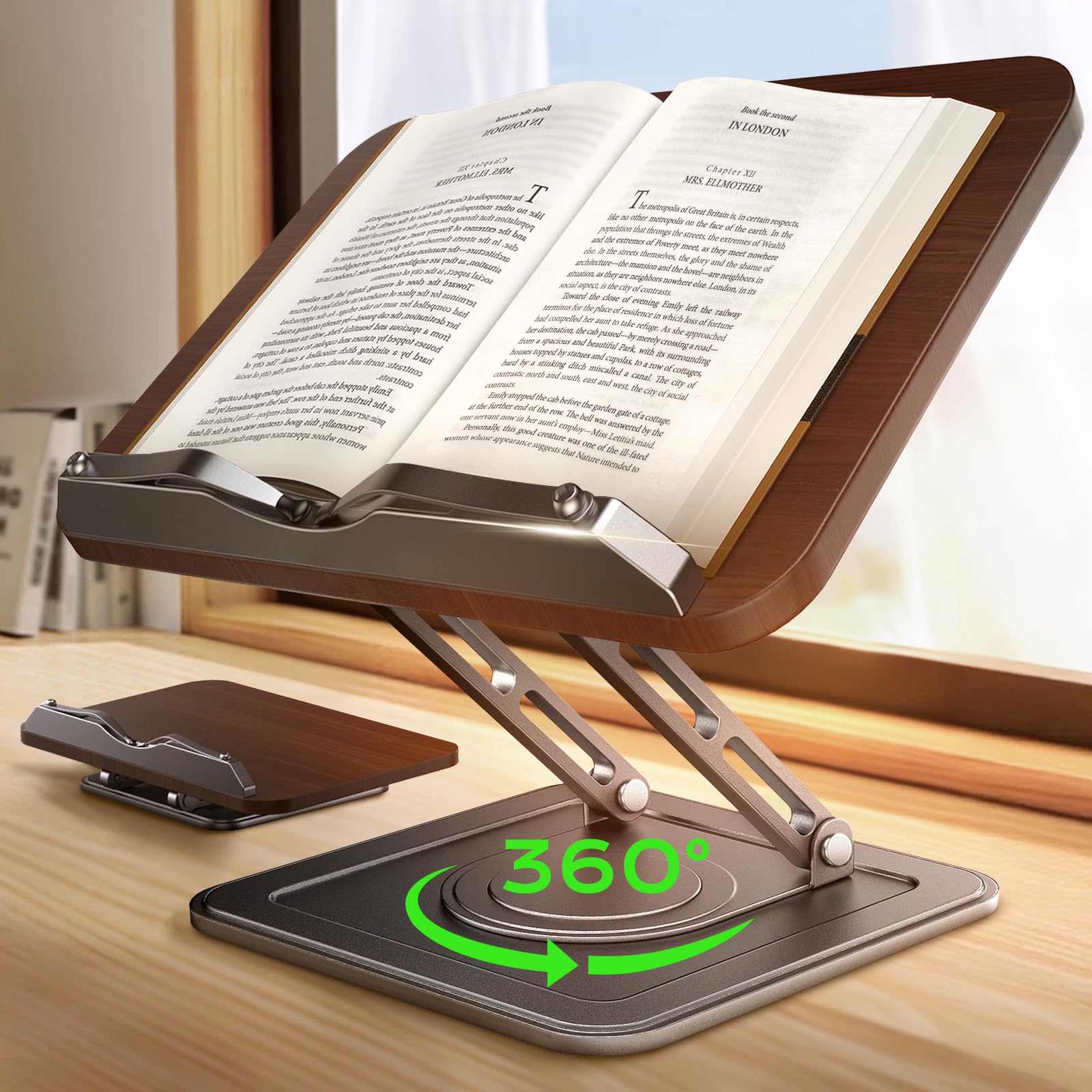
Adjustable rotating book stand
The current listing describes a 360° rotating holder with a page clip. Compare its footprint with your side table, tray, or other reading surface.
View on Amazon ↗These are editorially selected examples, not universal recommendations. Re-check the live listing before buying.
Frequently asked questions
Do I need a separate chair for a reading corner?
No. A sofa, dining chair, bed edge, or floor setup can work when the support and light fit how you sit.
What is the most important item in a small reading corner?
Reliable, comfortable light is usually the first thing to solve, followed by support and a reachable surface.
How do I make a reading corner in a bedroom?
Use an existing corner, add focused light, keep the current book nearby, and avoid blocking circulation or storage.
How many books should be kept in the corner?
Keep a small active queue, such as one current book and a few next options, rather than the entire collection.
Can a reading corner be temporary?
Yes. A tray, portable lamp, and cushion can create a setup that moves between rooms.
How can I make a reading corner feel calmer?
Reduce visual clutter, soften the light, keep controls reachable, and remove the steps that delay starting.
How can a reading corner work in a very small room?
Use one comfortable seat, directional light, and vertical or hidden storage instead of trying to build a full room within a room.
Is natural light enough for a reading corner?
It can help during the day, but a focused lamp makes the corner more dependable in the evening and on darker days.
What should stay within reach?
Keep the current book, a bookmark, a light, and any small note-taking item close enough that starting takes little effort.
How can I keep the corner easy to use?
Leave enough clear space to sit down immediately, and avoid turning the reading spot into general storage.
Key takeaways
- Start with the spot and routine you already have.
- Solve light and support before adding decoration.
- Prefer portable, multipurpose pieces in a small room.
- Test the corner at the time and with the book you actually use.
Useful Sources And Verification
This guide is original editorial guidance. For broader library and reading resources, verify details through Library of Congress, American Library Association, and New York Public Library. Books Club does not claim firsthand testing unless a page states it clearly.