
Um bom cantinho de leitura não precisa de um quarto extra. Precisa de um lugar confiável para sentar, luz que facilite a leitura, uma superfície para o livro que você está usando e organização suficiente para que o início da leitura pareça simples. Em um espaço pequeno, a melhor configuração geralmente é aquela que pode ser recolhida ou que serve a mais de uma função.
Comece pelo local que você já usa.
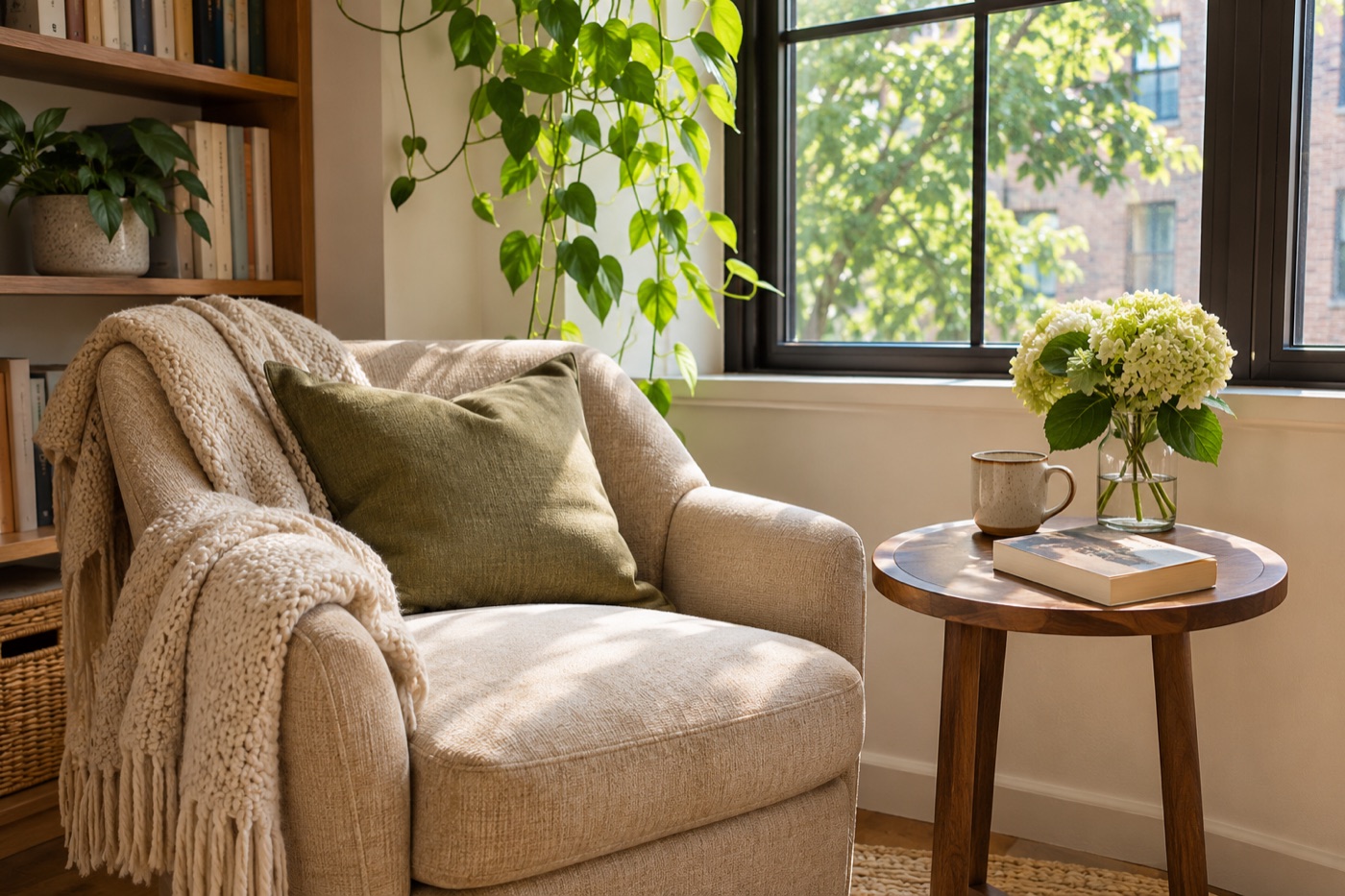
Procure o lugar onde você naturalmente para: a ponta de um sofá, um canto do quarto, uma cadeira de jantar ou a beira de uma janela. Um cantinho de leitura funciona melhor quando se encaixa em uma rotina já existente do que quando exige que você atravesse a casa toda para chegar até ele.
Observe a circulação ao redor. Uma bela cadeira colocada em uma passagem pode se tornar incômoda. Um pequeno canto ao lado de uma mesa pode ser mais útil do que uma área maior que precisa ser reorganizada a cada uso. Meça a cadeira, o alcance da luminária e o espaço necessário para ficar em pé antes de comprar qualquer coisa.
Escolha um local com limites bem definidos. Uma parede, um tapete, uma mesa lateral ou uma luz direcionada podem indicar que aquele é um espaço para leitura, mesmo que o cômodo tenha outras funções.
Faça da leveza o primeiro investimento
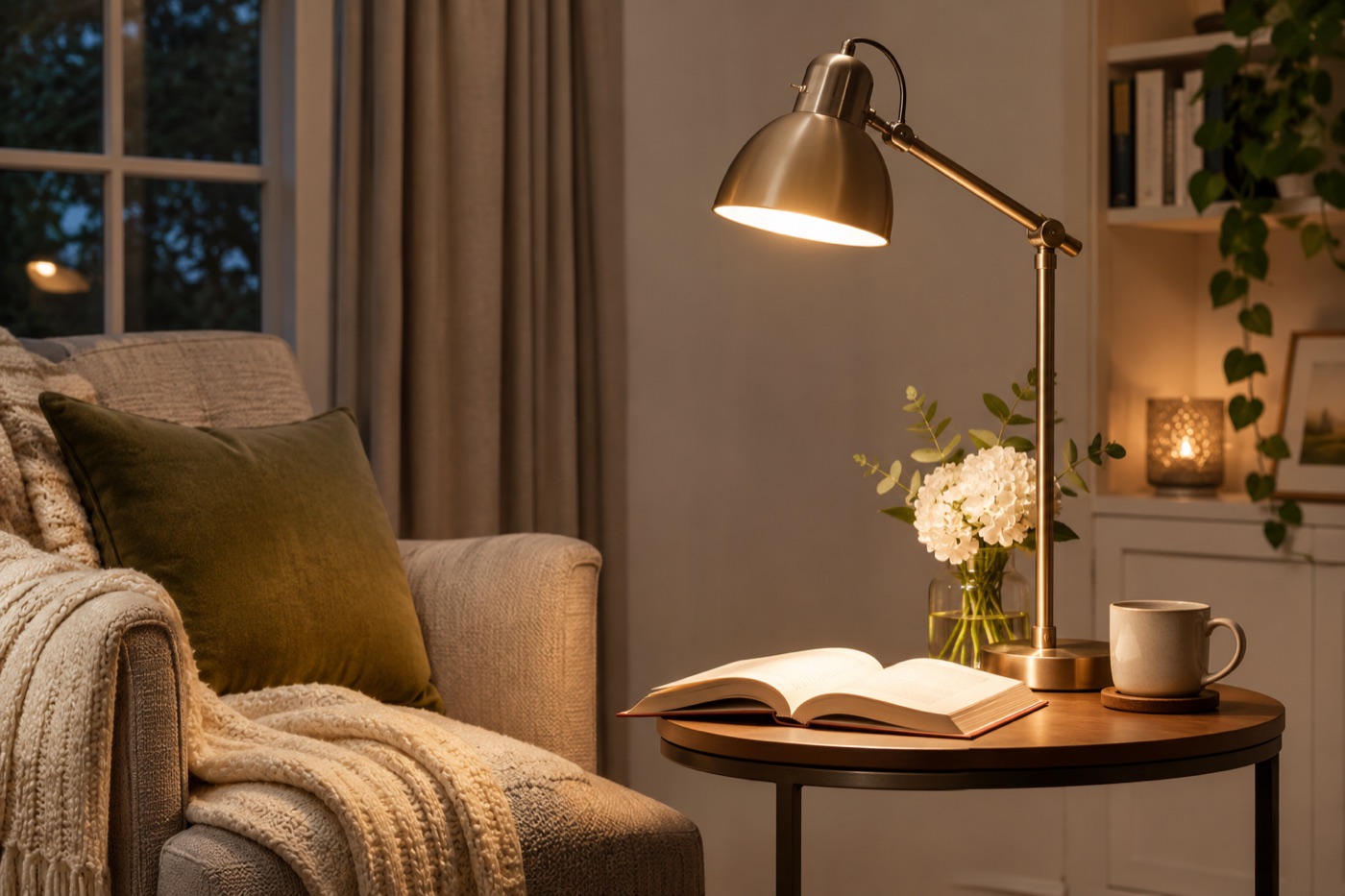
O conforto ao ler vem antes da decoração. Procure uma luz que alcance a página sem incidir diretamente nos seus olhos ou iluminar todo o ambiente. Um braço flexível, uma base estável e facilidade de manuseio geralmente são mais importantes do que um formato chamativo.
Use diferentes níveis de iluminação sempre que possível. Uma luz ambiente mais suave reduz o contraste entre uma página clara e um fundo escuro, enquanto uma luz de leitura direcionada ilumina a página em si. Se você lê em uma tela, preste atenção ao brilho e aos reflexos, além da intensidade da luz.
Posicione a luz ligeiramente de lado, em vez de diretamente atrás da sua cabeça. A posição exata depende se você é destro ou canhoto e se a página ou a tela reflete a luz, portanto, teste a configuração com o material que você costuma ler.
Escolha um suporte que se adapte à sua forma de se sentar.
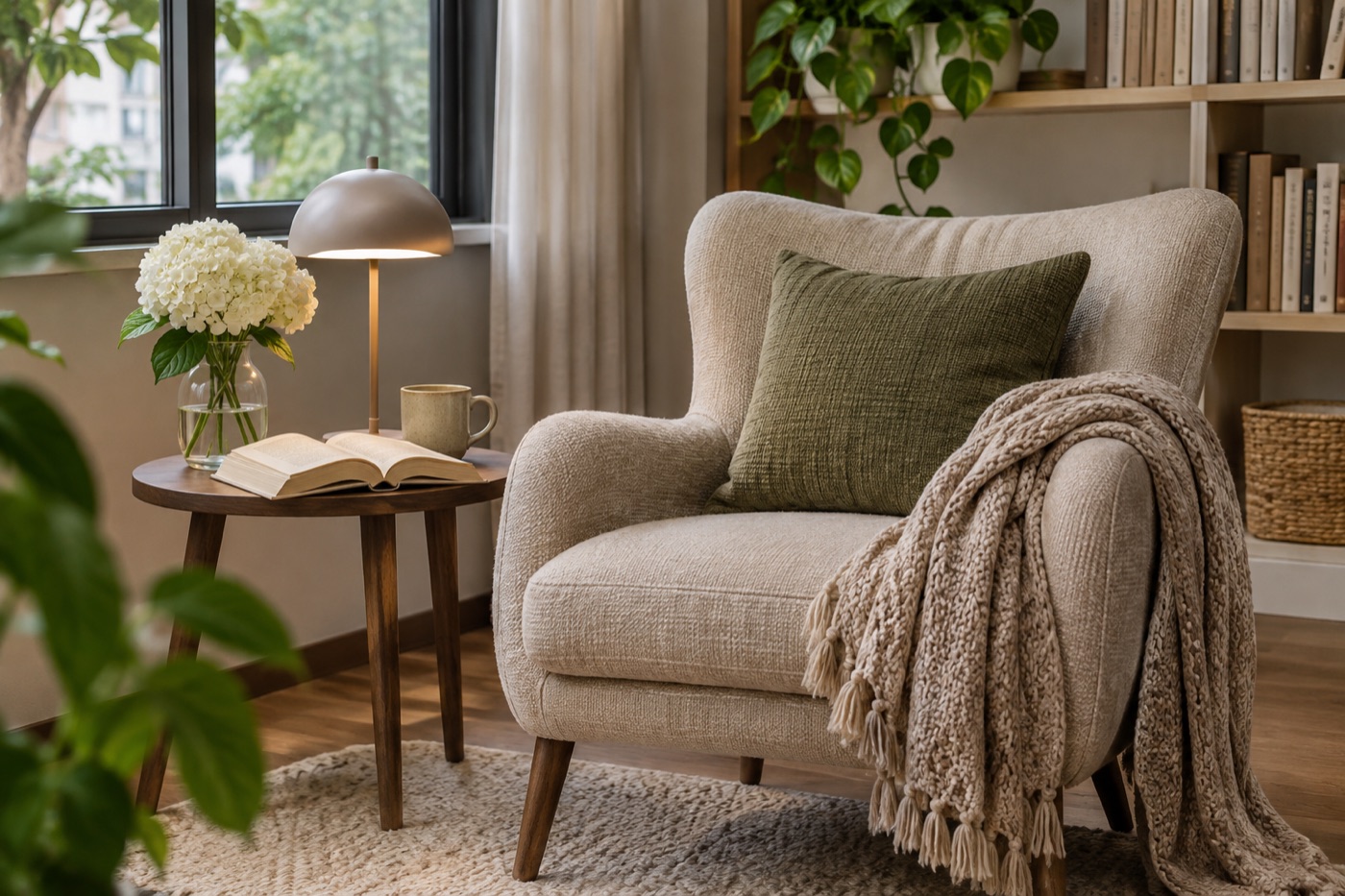
Você não precisa de uma cadeira específica para leitura. Precisa, sim, de um apoio que permita que você fique imóvel sem precisar se ajustar constantemente. Se você lê no sofá, uma almofada firme ou um travesseiro pequeno podem apoiar a região lombar ou o cotovelo. Se você lê na cama, proteja o pescoço de se inclinar para a frente por longos períodos.
Consider the height of the seat, the place where your feet rest, and whether you can change position. Reading comfort is not a contest to remain perfectly still. A setup that allows small adjustments is usually kinder than one that locks you into a single posture.
Keep the book at a comfortable distance. If you are leaning forward to see the page, change the light, the support, or the text size before blaming your attention.
Use small-space storage deliberately
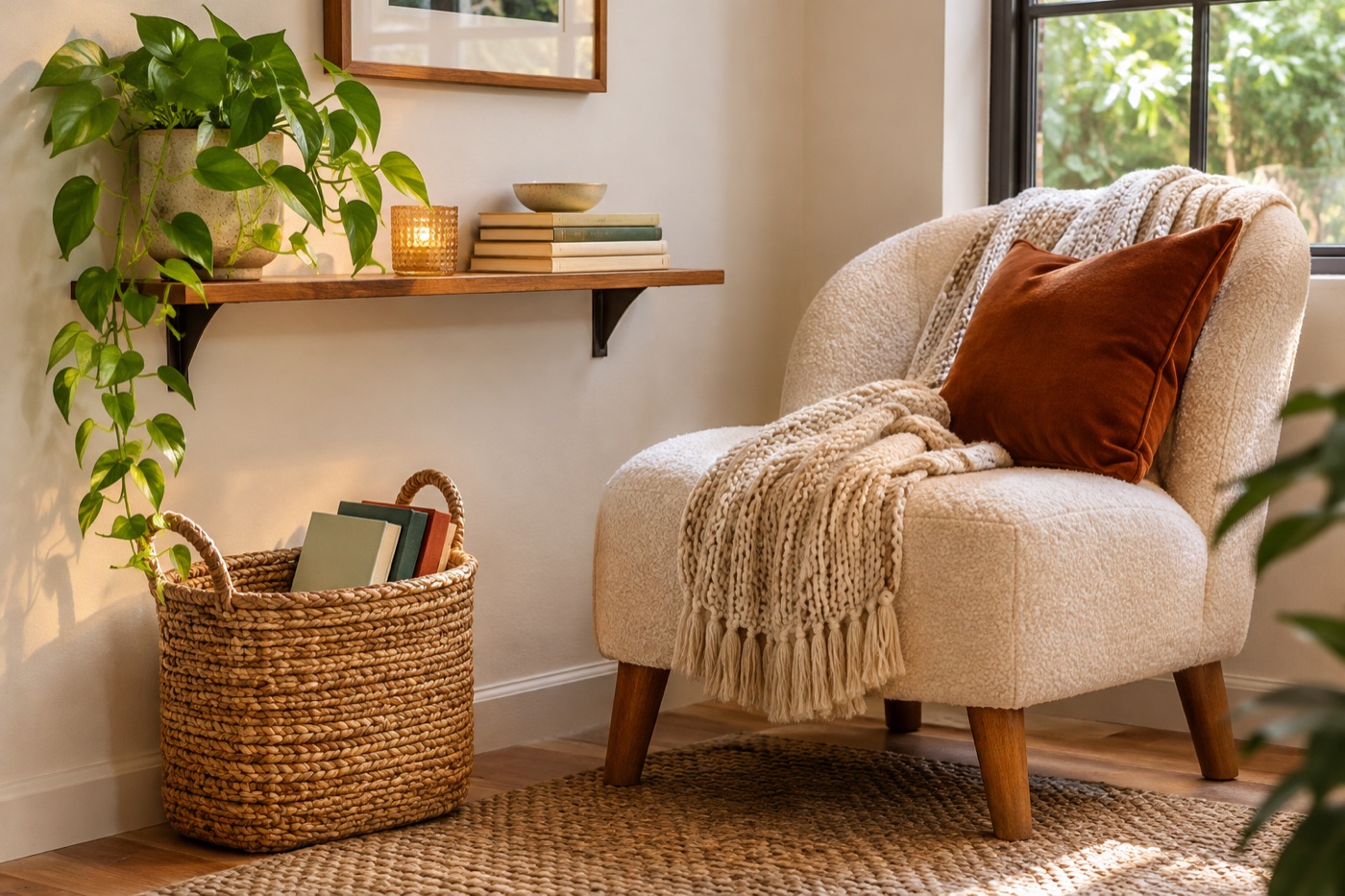
Keep only current and next-up books within reach. A narrow shelf, a basket, or one section of a side table can become a visible reading queue without turning the room into a storage problem.
Use vertical space when the floor is limited, but secure shelves and avoid placing heavy objects where they can fall. If your home is shared, give the reading corner a clear boundary so books do not become part of the household’s general surface clutter.
A small tray can hold a book, bookmark, reading glasses, and a notebook. The tray is useful because it lets the reading setup move when the room needs to change jobs.
Design for the moment before reading
Many reading corners fail before the first page because the setup is difficult to begin. Keep the next book visible. Place the bookmark where you can find it. Make the light switch reachable. If you use an e-reader, keep the charger nearby without creating a cable trap.
Create one small ritual that signals the transition: dim the overhead light, make tea, put the phone out of reach, or write the starting page on a note. The ritual should be short enough that it helps rather than becomes a performance.
If the space is shared, create a reset rule. At the end of a session, return the book and light to their places so the corner is ready for the next use.
A small-space checklist
Before you call the corner finished, sit there for fifteen minutes with the book you actually read. Check whether the page is evenly lit, whether your shoulders relax, whether the surface is large enough, and whether you can leave the setup without blocking the room.
Notice the sound and temperature. A corner beside a television, draft, or busy doorway may need a small adjustment. You can change the chair angle, add a textile, move the lamp, or choose a quieter time. Good design is a series of small corrections, not a single shopping trip.
Keep the setup honest. If you only read in short bursts, design for short bursts. If you read on the floor, support that position instead of building a picture of a reading life you do not use.
Design for changing rooms and changing days
A small reading corner often has to share its space with work, sleep, meals, or family life. Make the setup modular. A lamp that can move, a tray that can be lifted, and a cushion that can return to another chair are often more useful than furniture that only serves one purpose. The goal is not to mark territory permanently; it is to make reading easy when the room changes jobs.
Think about the transition into the corner. If the light requires a hidden switch, the book is stored in another room, and the seat needs to be cleared first, the setup has too many steps. Remove one step at a time. Put the book closer, use a reachable switch, or store a small basket beside the chair. Each adjustment lowers the cost of beginning.
A reading corner should also work when your body or attention is different. Add a second posture, such as a footstool or alternate cushion, so you are not forced to read in one position. If you use glasses, a notebook, or an accessibility aid, give it a predictable place. A calm design includes the tools you actually need.
The visual style can stay simple. One warm textile, a small print, or a book stack can create a sense of invitation, but decoration should not crowd the surface you need. Leave enough room for the current book and a drink, and use a stable container if the corner is near children or pets.
Test the corner at the time you intend to use it. Morning glare, evening shadows, background noise, and room temperature can change the experience. A setup that looks perfect in a photograph may be uncomfortable at night. Observe the real conditions and tune the corner from there.
Let the corner earn its space
A reading corner should earn its footprint by supporting a behavior you already want. If the space is rarely used, do not add more objects first. Sit there with the current book and observe what interrupts you. The answer may be a missing surface, a poor lamp angle, a cold draft, or the fact that the chair faces a screen that keeps pulling attention.
Small homes benefit from objects with more than one job. A side table can hold a lamp and become a writing surface. A basket can store books and move when guests arrive. A portable light can serve a desk, bedside table, or reading chair. Multipurpose design keeps the corner useful rather than precious.
Consider how the setup looks when it is not in use. If the corner creates visual noise, it may become a reminder of unfinished tasks. Keep the palette calm, hide cables safely, and limit the active stack. The corner should invite you without demanding maintenance.
If several people share the space, make the reading boundary understandable. A small lamp, a tray, or a distinctive textile can signal that the setup is in use. This is a social design problem as much as a decorating problem. Clarity reduces interruptions and makes the habit easier to protect.
O canto ideal pode mudar ao longo do ano. A luz do dia, a temperatura e a rotina da casa se alteram. Reavalie a disposição dos móveis ocasionalmente e mude-os de lugar quando o ambiente não for mais propício ao hábito. Uma vida dedicada à leitura é mais importante do que a fidelidade a uma única cadeira.
Pequenas ferramentas para usar melhor o canto
Os produtos abaixo são apoios físicos opcionais, não uma lista de compras. Cada um resolve um atrito prático de espaços pequenos: luz focada, leitura em tela sem mesa ou um lugar estável para manter o livro aberto. Confira medidas, compatibilidade e disponibilidade antes de comprar.
Comece com um teste reversível: use a luminária, a almofada, a bandeja ou o suporte por algumas noites antes de comprar mais móveis. Um canto que funciona na prática vale mais do que uma composição bonita que apenas parece pronta.

Luz de leitura Glocusent
O anúncio atual descreve uma luz de pescoço flexível com várias cores, níveis de brilho e uso recarregável. Confira a variante ativa antes de comprar.
Ver na Amazon ↗
Suporte acolchoado para tablet Lamicall
O anúncio atual descreve um suporte acolchoado para tablet pensado para cama ou colo, com seis ângulos de visão. Confirme o tamanho do dispositivo e a superfície de apoio.
Ver na Amazon ↗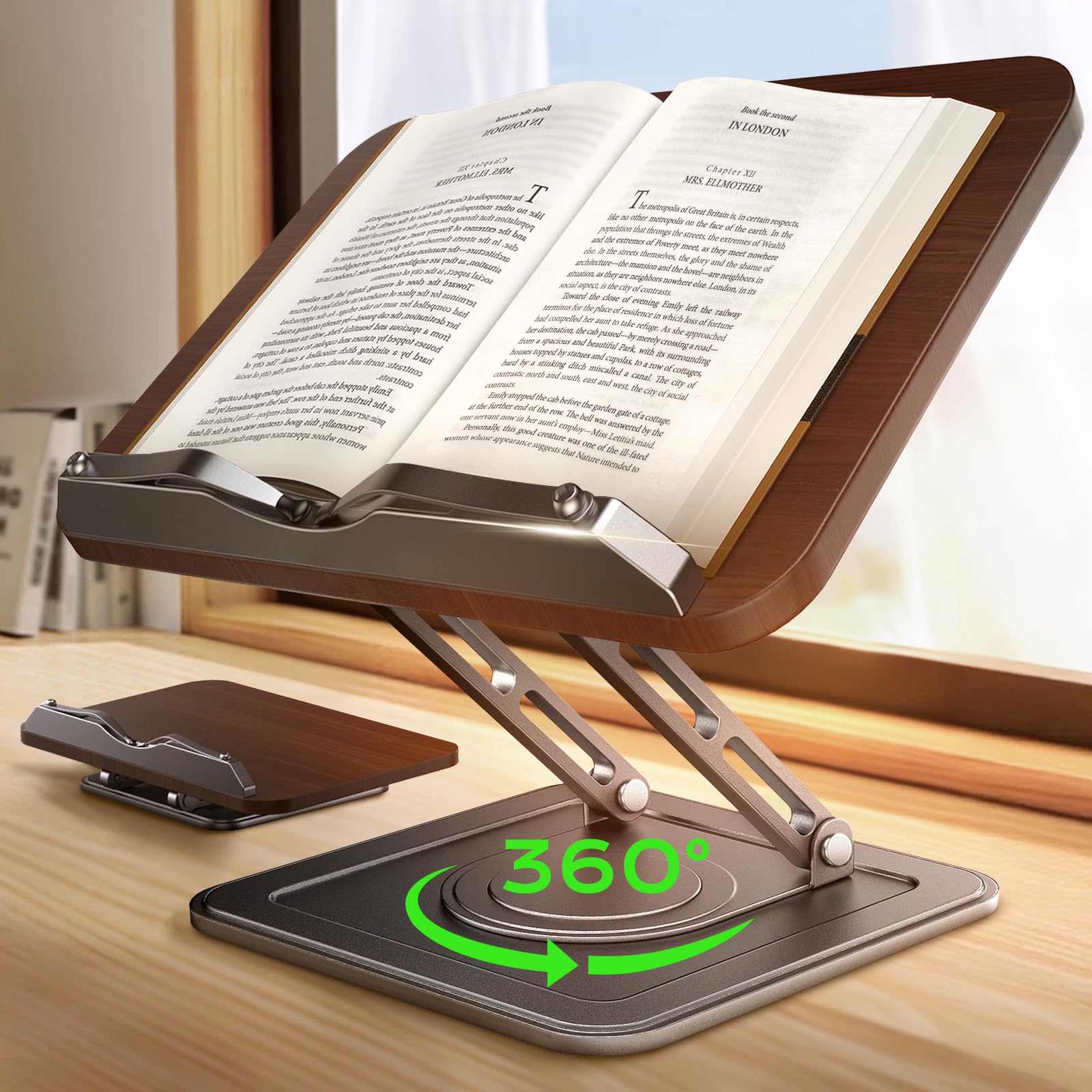
Suporte giratório para livros
O anúncio atual descreve um suporte giratório de 360° com presilha para páginas. Compare a área ocupada com sua mesa lateral, bandeja ou outra superfície de leitura.
Ver na Amazon ↗São exemplos selecionados editorialmente, não recomendações universais. Confira o anúncio ativo antes de comprar.
Perguntas frequentes
Preciso de uma cadeira separada para um cantinho de leitura?
Não. Um sofá, uma cadeira de jantar, a beira da cama ou mesmo uma solução no chão podem funcionar bem, desde que o suporte e a iluminação sejam adequados à sua postura ao sentar.
Qual é o item mais importante em um pequeno cantinho de leitura?
Uma iluminação confiável e confortável geralmente é a primeira coisa a resolver, seguida por suporte e uma superfície acessível.
Como faço para criar um cantinho de leitura no quarto?
Aproveite um canto já existente, adicione iluminação direcionada, mantenha o livro atual por perto e evite bloquear a circulação ou o armazenamento.
Quantos livros devem ser guardados no canto?
Mantenha uma pequena fila de leitura ativa, como um livro atual e algumas opções de próximos livros, em vez de toda a coleção.
Um cantinho de leitura pode ser temporário?
Sim. Uma bandeja, um abajur portátil e uma almofada podem criar um conjunto que pode ser transportado entre cômodos.
Como posso tornar um cantinho de leitura mais tranquilo?
Reduza a poluição visual, suavize a luz, mantenha os controles acessíveis e remova as etapas que atrasam o início da operação.
Como um cantinho de leitura pode funcionar em um espaço muito pequeno?
Use um assento confortável, luz direcionada e armazenamento vertical ou escondido, em vez de tentar criar um cômodo inteiro dentro de outro.
A luz natural é suficiente?
Ela pode ajudar durante o dia, mas uma luminária focada torna o canto mais confiável à noite e em dias escuros.
O que deve ficar ao alcance?
Deixe por perto o livro atual, um marcador, uma luz e qualquer item pequeno para anotações.
Como manter o canto fácil de usar?
Deixe espaço livre para sentar imediatamente e não transforme o lugar de leitura em armazenamento geral.
Principais conclusões
- Comece pelo lugar e pela rotina que você já tem.
- Resolva luz e apoio antes de adicionar decoração.
- Prefira peças portáteis e multifuncionais em espaços pequenos.
- Teste o canto no horário e com o livro que você realmente usa.
Fontes úteis e verificação
Este guia é uma orientação editorial original. Para obter mais informações sobre recursos de leitura e bibliotecas, consulte os sites da Biblioteca do Congresso , da Associação Americana de Bibliotecas e da Biblioteca Pública de Nova York . O Books Club não afirma ter realizado testes em primeira mão, a menos que isso esteja claramente indicado em alguma página.