
Choose a reading journal by the kind of memory you want to keep. A simple notebook can be enough for quotes and reactions; a structured journal helps with tracking, discussion, and long-term patterns. The best format is the one you will open again.

Decide what you want the journal to remember
A reading journal can hold far more than a list of finished titles. It can preserve a sentence that changed your view, a question you want to revisit, the name of a character you would otherwise forget, or a connection between two books. Start by naming the memory you want. If you want a record of volume, a simple log is enough. If you want a record of thought, you need space for reactions and questions.
This distinction prevents a common mismatch: buying a beautiful tracker when what you really want is a place to think. Design matters, but the journal’s job should come first.
Choose the right level of structure
For readers who want a simple log
A simple log works when you want continuity without a second reading project. Record the title, author, date, format, and one sentence about the experience. Add a question if you want the entry to stay useful later. A page-per-book layout can be convenient, but a chronological notebook may be more flexible when some books produce a paragraph and others produce a line.
Do not force a rating into every entry. Ratings are quick signals, not complete memories. A sentence about why the book worked or failed will usually tell you more.
For readers who want deeper notes
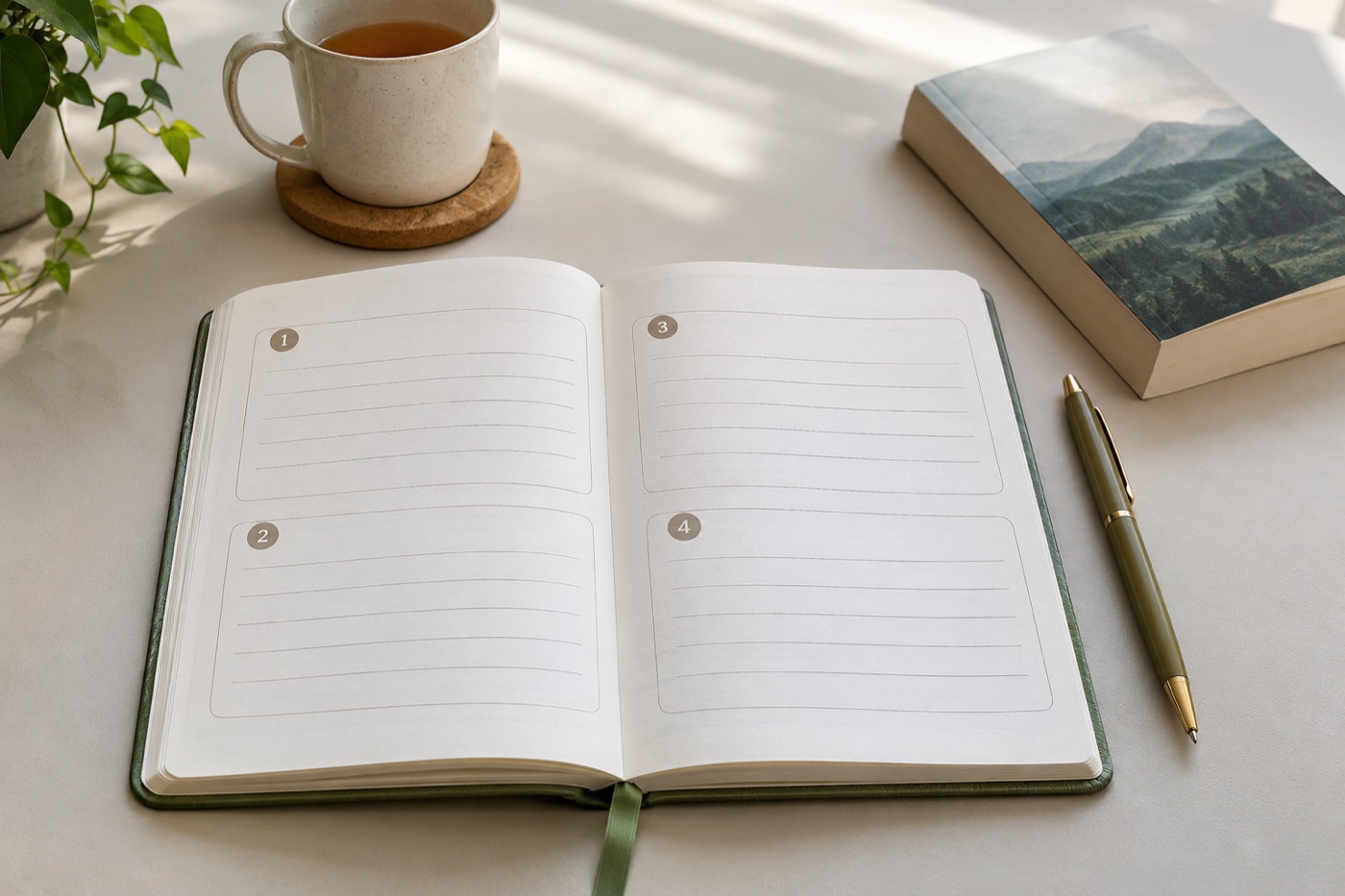
Choose a journal with enough open space for the way you actually write. Prompts can help when you are tired, but blank pages matter when a book takes an unexpected direction. Useful prompts include: What changed? What remains unresolved? Which detail gained importance? What would I want to discuss with another reader?
Separate quotation from response. Record the page or location for a passage, then add your own note. This keeps the journal from becoming a collection of lines detached from the thoughts they created.
For readers who use journals with book clubs
A book-club journal should make discussion easier, not duplicate the meeting. Leave room for passages, questions, character relationships, and points of disagreement. A useful spread might include the date, the section discussed, one evidence-based observation, and one question that invites different interpretations.
Keep spoilers visible but contained. If you return to the journal later, you should be able to see what you thought before the ending without accidentally reading the conclusion first.
Paper, digital, or hybrid?
Paper supports slower annotation and gives the record a physical place. Digital notes make searching, tagging, copying links, and carrying a large archive easier. A hybrid system can work well: quick notes in a phone during the day, a considered entry in a paper journal at the end of a book.
Choose based on retrieval, not identity. The right question is where you will actually look when you want to remember a book six months from now.

Make the journal easy to reopen
Leave a visible place for the current book, keep a pen nearby, and use a consistent first line. If the journal is stored out of sight, the friction of finding it can be enough to stop the habit. A small index or monthly list can help you return without searching every page.
Do not backfill every missing entry. Resume with today’s book and let the gap remain a gap. A journal is a record of reading, not proof of perfect consistency.
Use prompts without letting them control the reading
Prompts should open attention. They should not make every book answer the same set of questions. Use one prompt when you need a doorway, then follow the book’s own concerns. If a prompt feels irrelevant, skip it. The journal belongs to the reading experience, not the other way around.
For nonfiction, add a distinction between what the author claims, what evidence supports it, and what you want to verify. For fiction, note what the text shows before deciding what it means.
Frequently asked questions
What should I write in a reading journal?
Record the title, date, format, one reaction, one question, and any passage or detail you want to remember.
Is a reading journal the same as a reading tracker?
Not necessarily. A tracker records activity; a journal can preserve interpretation, memory, and questions.
Should I use prompts?
Use prompts as optional doors into reflection. Skip any that do not fit the book or your mood.
Paper or digital?
Choose the format you will reopen and search when you want to remember a book later.
What if I miss several weeks?
Resume with the current book. Do not turn backfilling into a reason to stop.
Do I need ratings?
No. A short explanation often preserves more useful information than a score.

Build a journal you can keep using
Before buying, check the page size, binding, paper, prompt density, index options, portability, and whether the format suits your writing tools. If the journal is a gift, avoid assuming that a highly structured layout will feel helpful. A blank notebook with a thoughtful note may be more flexible.
The best reading journal becomes part of your memory system quietly. It gives you enough structure to return and enough freedom to notice what the book actually did.
Useful Sources And Verification
Keep the record useful tomorrow
The best journal entry is one that helps future you return to the book. Name the detail, question, or feeling that deserves to survive the day, then stop. A small, honest record is easier to reopen than a perfect system that asks too much.
Let the journal change as your reading changes. Add structure when you need it, remove structure when it becomes friction, and keep the book at the center.
Keep the decision grounded in use
Before you commit, compare the choice with the place, time, and attention you actually have. A journal should be easy to reopen. A bookmark should stay gentle and findable. An e-reader should solve a real access or portability problem. A reading light should clarify the page without taking over the room.
Start small, verify the current details, and let real use teach you what to change. The best reading-life tools are not the most complicated ones. They are the ones that quietly make returning to a book easier.
Leave room for change
Reading habits shift with work, travel, health, space, and mood. Choose a setup that can adapt instead of forcing you to preserve one perfect routine. If a tool adds friction, change the tool, the placement, or the expectation. A flexible reading life is not a weaker one; it is more likely to last.
Use this guide as a decision aid, not a rulebook. The final test is simple: does the choice help you return to the page with less resistance and more comfort?
Verify journal dimensions, paper, binding, accessibility, availability, and current product details through the publisher or manufacturer page and a trusted retailer. For reading records and library metadata, consult Library of Congress, WorldCat, and a trusted library catalog. This guide does not claim firsthand product testing.
Keep notes proportional to the book
A short story may need one line; a long novel may need several pages. Let the journal reflect the book’s scale instead of applying a fixed quota. If every entry must be a certain length, the habit becomes performance. Use the smallest record that will still help you remember what mattered.
Separate facts from interpretation
For a useful future record, distinguish what happened on the page from what you think it means. Note a scene, image, claim, or formal choice first. Then add your response. This makes it easier to revisit an entry after time has changed your perspective.
Make the archive searchable
If you keep years of notes, use a simple index: author, title, month, format, and one or two themes. Digital readers can add tags; paper readers can reserve the first pages for an index. The system does not need to be elaborate. It only needs to help you find a memory when you want it.
Use a journal to improve recommendations
When you recommend a book, your notes can explain the match more honestly. Mention the voice, pace, subject, and the kind of attention the book asks for. A journal entry that preserves one caveat is often more useful than a perfect score.
Protect privacy and ownership
Reading notes can contain personal reactions, family memories, or opinions about other people. Decide where the journal lives and whether you want to share it. A private record can be more candid, while a shared journal may create useful community. Choose the boundary intentionally.
Review the journal occasionally
Once a month or season, skim a few entries. Look for recurring interests, abandoned questions, and books you want to revisit. This review can guide your next choice without turning the journal into a productivity report. The value is in noticing your reading life as it changes.
Let the journal hold uncertainty
You do not need to decide immediately whether a book succeeded. Write what you noticed, what confused you, and what you want to test later. Uncertainty is part of reading, and preserving it can make a later reread more revealing.
Use different entry types
Try a one-line log, a longer end-of-book note, a page of questions, or a list of connected titles. Variety keeps the journal responsive. A single rigid template can make every book look the same even when the reading experience is not.
Choose tools that invite return
Paper quality, binding, pen compatibility, portability, and page layout all matter because they change whether the journal feels easy to open. Look for the quietest tool that gives you enough room. The journal should invite attention, not demand a display.
Keep the record connected to the book
Write enough context that a future reader, including you, can understand the note. Add the edition or format when it changes the experience, and mark whether a thought came from the text, a conversation, or your own life. This simple distinction keeps the archive honest and easier to revisit.
Make reflection optional but available
On a busy day, a title and one sentence are enough. On a slower day, use the open pages. The journal should support different levels of attention without making the shorter entry feel like a failure.
Use the next entry to continue the thread
At the end of a note, add one line about what you want to read, ask, or notice next. That line can become a bridge between books and keep the archive from feeling like a stack of disconnected summaries.
Use the journal as a conversation starter
A note can help you explain a recommendation, prepare for a book club, or remember why a passage mattered. Keep the language specific and leave room for another reader to disagree. The journal becomes more valuable when it supports connection as well as private memory.
Let the system stay small
One notebook, one pen, and one consistent place may be enough. Add tools only when they solve a problem you have actually noticed. A smaller system is easier to keep and easier to trust.
Make the next action clear
Write down the problem you want to solve, the feature or format that matters, and the condition that could make the choice wrong. Then take one small action: borrow a sample, measure the space, check the current specification, open the journal, or place the bookmark where you will use it. Practical guidance becomes useful when it ends in something you can do.
Review the choice after real use. If the tool creates friction, change the tool or the setup. You do not need to defend a purchase, a system, or a habit that no longer supports your reading life.
Let the tool disappear into the habit
The reading life is larger than any accessory or device. Choose the option that reduces friction, respects your space, and leaves your attention available for the book. If the object keeps demanding attention, treat that as useful evidence and adjust the setup.
A good choice remains flexible. It can support a busy week, a slower season, a shared room, a new format, or a change in the way you remember what you read. That flexibility is part of the value.
Check the fit before you commit
Before buying or building a system, verify the current details and compare them with your real reading conditions. The smallest useful choice is often better than an impressive but complicated one. Keep a backup plan, allow the setup to change, and let actual use guide the next decision.