The fastest way to choose your next book is to stop asking which book is best and ask which reading experience fits the time and attention you actually have. In ten minutes, you can narrow a huge shelf to one sensible next choice by checking four things: mood, available time, format, and tolerance for difficulty.
Start with the reading experience, not the title
Book discovery often becomes harder when every choice arrives with a ranking attached. A bestseller list can tell you what many people bought or discussed, but it cannot tell you whether you want a quiet mystery, a demanding historical novel, a fast plot, or a warm story that asks very little from you tonight. Choosing well begins with a small act of honesty: name the feeling you want from the next hour.
Use a plain sentence such as “I want something atmospheric but not bleak,” “I want a story I can finish in short sessions,” or “I want a book that gives my book club something to discuss.” That sentence is more useful than an abstract genre label because it describes the experience you are trying to create.

The 10-minute method
First, give yourself two minutes to choose a mood. Pick one word or phrase: curious, comforted, challenged, amused, transported, unsettled, or focused. You do not need the perfect label. The goal is to rule out books that are clearly wrong for the moment.
Next, check your time horizon. If you have a packed week, a long novel with a slow opening may be a poor immediate fit even if it is exactly your kind of book in a different season. If you have a long weekend or a commute, a book with momentum may feel easier to sustain. Time does not determine quality; it changes the shape of a good choice.
Third, decide on format. Print, ebook, and audio create different reading conditions. A large hardcover may be lovely at a desk but awkward on a train. An ebook can be convenient when you want to carry several possibilities. Audio can make a familiar route feel available for stories even when your eyes are busy. Choose the format that lowers friction for the actual place you will read.
Finally, check difficulty. Difficulty is not a virtue by itself. Ask whether you want unusual structure, dense prose, a large cast, emotionally heavy material, or a straightforward narrative. The best next book is often the one whose demands match your available attention.

Use fit filters to narrow the shelf
Once you know the experience you want, apply three filters: pace, emotional temperature, and subject. Pace tells you how quickly the story tends to reveal its shape. Emotional temperature tells you whether the book leans tender, tense, bleak, playful, or contemplative. Subject tells you what the book is actually about beneath its packaging.
You can apply these filters to a publisher description, a library record, a trusted review, or a friend’s recommendation. Do not treat one short blurb as a complete reading forecast. Use several small signals and notice whether they point in the same direction.
At Books Club, our book profiles keep these signals separate from personal testing claims. A description may come from publisher or library information; a note about pace or mood is editorial interpretation; recurring reader reactions are patterns rather than guarantees. That separation helps you choose without pretending that a book will feel identical to every person.

A simple decision tree
If you want comfort, start with a book whose premise is easy to understand and whose emotional direction is clear. If you want challenge, look for a book with a strong voice, unusual structure, or a subject you have not explored. If you want conversation, choose a book with enough interpretive space for disagreement but enough shape for everyone to discuss the same object.
If you keep abandoning books, reduce the size of the decision. Pick a short novel, a collection, or a book with chapters that feel complete. If you are returning to reading after a long pause, do not make your first choice a test of identity. A readable, engaging book is not a lesser choice. It is a bridge back into the habit.
When two books still look right, choose the one you can begin immediately. Save the other on a short “next shelf” rather than reopening the entire search. A good decision is not the one that proves the most taste. It is the one that gets you reading.

Common mistakes to avoid
The first mistake is choosing for an imaginary version of yourself. Maybe you love the idea of reading a 900-page classic, but this week you need something that can survive interruptions. The second mistake is treating every recommendation as a promise. A friend’s favorite book is evidence of their experience, not a contract for yours.
The third mistake is confusing abundance with freedom. Ten open tabs, three saved lists, and a recommendation feed can create more friction than a small physical stack. Keep three active options: one easy, one stretching, and one wildcard. When you finish or abandon one, replace only that slot.
A repeatable 10-minute routine
Keep a short reading note with four lines: mood, time, format, and difficulty. When you want a book, fill in the lines before searching. Then choose three candidates and write one sentence about why each could fit. The act of explaining the fit usually makes the decision obvious.
After you read for a few sessions, record whether the choice worked. Do not score the book as universally good or bad. Record the match: “right mood, wrong pace,” “excellent for audio,” or “interesting but too heavy for this week.” These notes become a personal recommendation system that is more useful than a generic ranking.
What the method looks like in real life
Imagine that you have twenty minutes before bed and want something absorbing but not emotionally punishing. You might rule out a long, dense novel, a book that depends on close daytime concentration, and anything whose subject feels too close to the news. A moody mystery, a warm character novel, or a short story collection may now fit better. The choice is not a statement about what you value permanently. It is a response to the conditions of this particular evening.
Now imagine a different week: you have a long commute, more energy, and a desire to learn. The same filters may point toward an audiobook, nonfiction, or a novel with a more demanding structure. The method stays stable while the answer changes. That is why it is more useful than a fixed list of “best books.”
You can also use the method with a recommendation from someone you trust. Instead of accepting or rejecting the recommendation immediately, translate it into fit language. Ask what the friend loved: the voice, the relationships, the puzzle, the setting, the historical frame, or the feeling at the end. Then decide whether that specific quality matches your current reading life.
When a book is available in several formats, compare the conditions rather than choosing by habit. A print edition may help you remember where you are in a long argument. An ebook may lower the weight and make a book available in more places. Audio may add performance and momentum. The format is part of the choice, not packaging after the fact.
The final step is to begin before the search expands again. Read the first few pages, then ask whether the experience matches the promise you were looking for. If it does, keep going. If it does not, stop early and return to the three-candidate shelf. The method works because it creates a small loop from intention to evidence to adjustment.
A final check before you commit
Before you buy or borrow, read the description of the format you plan to use. Check whether the edition is complete, whether the audio narration is what you want, or whether the ebook is likely to work on your device. These details are not distractions from the literary choice. They determine whether the choice can become a real reading session instead of another saved tab.
You can also ask what kind of ending you want right now. Some readers want closure, some want ambiguity, and some do not care as long as the journey is engaging. The ending is not a spoiler question; it is a mood question. Knowing your tolerance for open questions can prevent a mismatch that has nothing to do with quality.
If you are choosing for a gift or a group, add the other person’s conditions to the method. What can they access? What have they already read? What subjects might be unwelcome? A good recommendation is not only about your confidence in the book. It is about the recipient’s ability to receive it well.
When the decision still feels uncertain, make the smallest reversible choice. Borrow the book, read a sample, choose a library copy, or put the title on a short list instead of buying a large edition immediately. Reversibility lowers pressure and leaves room for better evidence.
The point of a ten-minute method is not to make reading mechanical. It is to return choice to the reader. A book can surprise you after a careful selection, and it can disappoint you after a thoughtful one. The method is successful when it helps you begin with realistic expectations and adjust without shame.
Small tools that reduce reading friction
These are optional physical tools, not required purchases. I included them because each one maps to a different friction point in the method: portability, note-taking, light, or hands-free setup. The links go to Amazon listings and may change by color, edition, price, or availability.
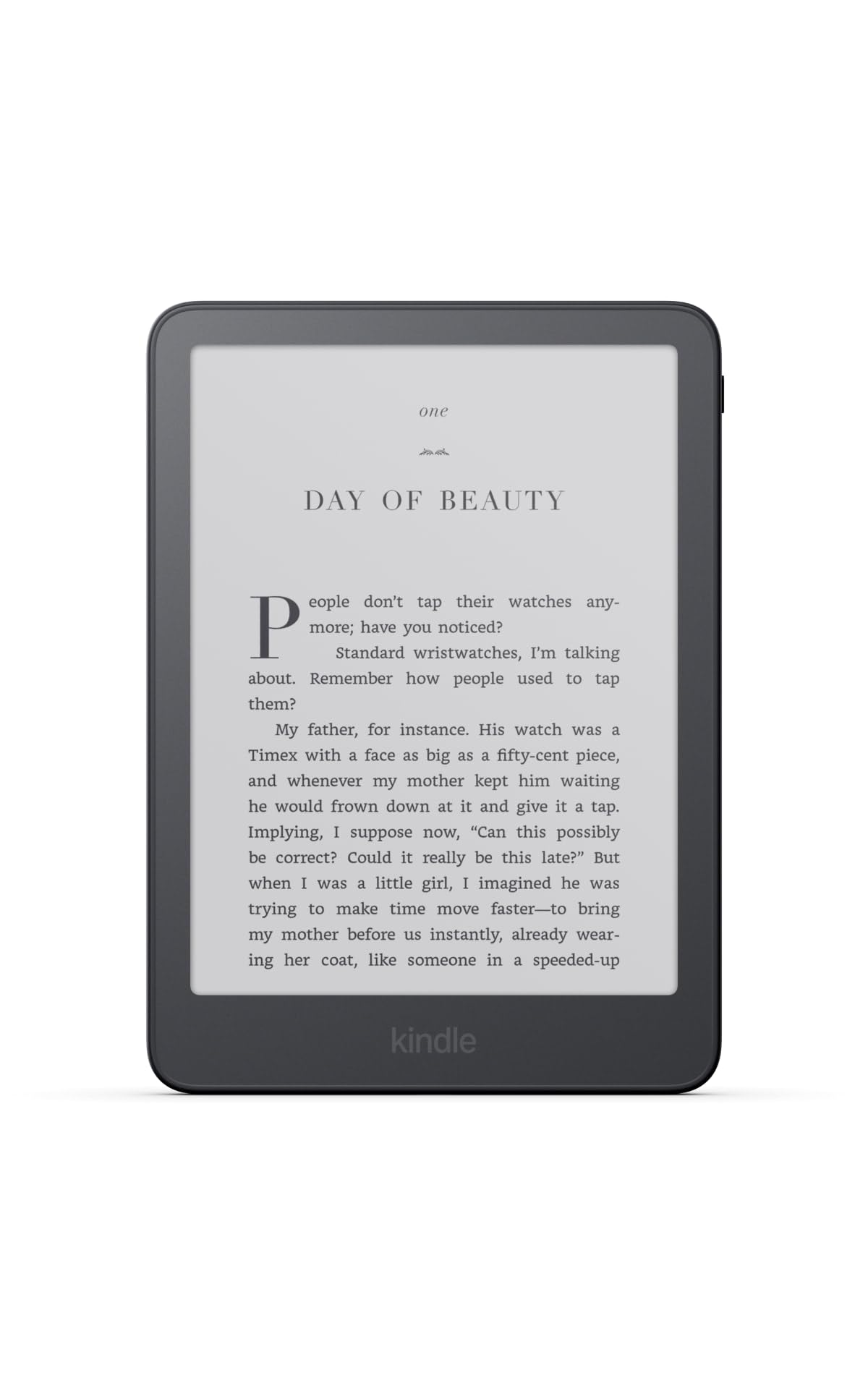
Kindle Paperwhite (newest model)
The current listing describes a 16GB Kindle Paperwhite with a 7-inch display and warm light. Check the listing for the exact color, ads setting, price, and availability.
View on Amazon ↗
Clever Fox Reading Journal
The current listing describes a 5.8 × 8.3-inch reading journal and book-tracking log. It is a simple place to record fit notes after a few sessions.
View on Amazon ↗
Glocusent reading light
The current listing describes a bendable neck light with multiple color and brightness settings and rechargeable use. Check the active variant before buying.
View on Amazon ↗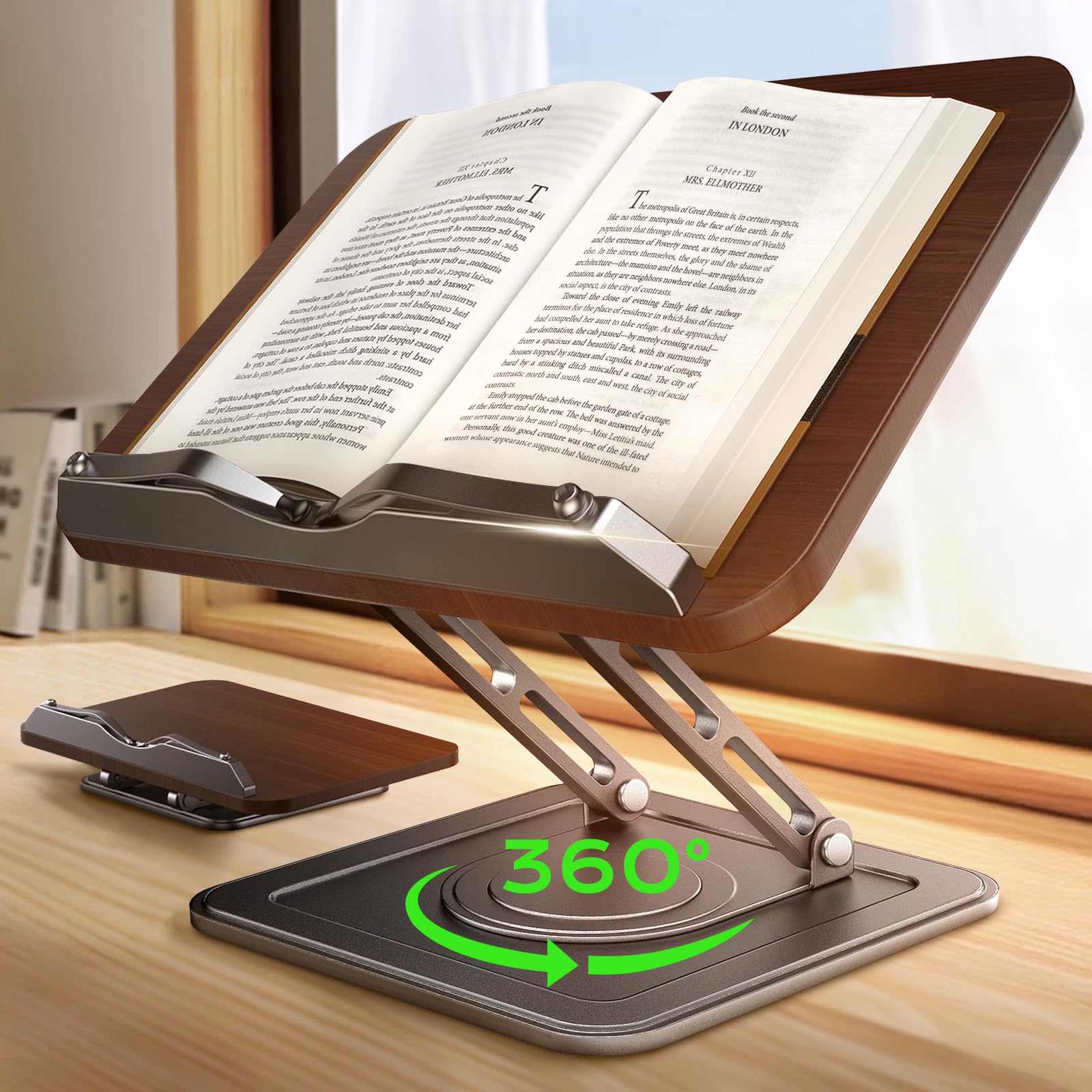
Adjustable rotating book stand
The current listing describes a 360° rotating holder with a page clip. Compare the dimensions with your book and reading surface before buying.
View on Amazon ↗These are editorially selected examples, not universal recommendations. Re-check the live listing before buying.
Frequently asked questions
What is the fastest way to choose a book?
Name the mood, time, format, and difficulty level you want, then compare only three candidates.
Should I choose by genre or mood?
Mood is usually the better first filter because two books in the same genre can create very different experiences.
What if I keep choosing books I do not finish?
Choose shorter or more immediately readable books for a while, and treat stopping as information about fit rather than a failure.
Is a bestseller automatically a good next read?
No. Popularity can be a useful discovery signal, but it cannot match a book to your available time or attention.
How many books should I keep in my next-up list?
Three active options is usually enough: an easy read, a stretch read, and a wildcard.
Does format really change the reading experience?
Yes. Weight, screen glare, portability, narration, and the place you read can all affect how naturally a book fits your routine.
What should I do if I only have a few minutes to choose?
Name the mood and time you have, remove obvious mismatches, and compare only a small number of realistic options.
Is it okay to abandon a book?
Yes. Stopping can be useful information about fit, timing, or attention rather than a failure.
How many options should I compare?
Three active options are usually enough: an easy read, a stretch, and a wildcard.
Should I choose print, ebook, or audio?
Choose the format that lowers friction in the place and time where you expect to read.
Key takeaways
- Choose for the reading experience you can support now.
- Lower friction before adding more tools or goals.
- Use notes and routines as support, not as a second performance task.
- Let fit, access, and timing guide the next decision.
Useful Sources And Verification
This guide is original editorial guidance. For broader library and reading resources, verify details through Library of Congress, American Library Association, and New York Public Library. Books Club does not claim firsthand testing unless a page states it clearly.