
A good reading log records just enough to help you return to a book later: title, author, date, format, one response, and one question. Add more only when the book or your own memory needs it. The best log is easy to reopen after a busy week.

Decide what the log is for
A reading log can be a memory aid, a list of finished books, a planning tool, a place to prepare for discussion, or a way to notice patterns over time. Those purposes need different levels of detail. If you only want to remember what you read, a chronological list may be enough. If you want to remember why a book mattered, you need room for a response and a question.
Start with one purpose instead of building a complete life-management system. A narrow tool is easier to use and more likely to survive the weeks when reading becomes irregular.
Choose the smallest useful entry
For a simple chronological log
Begin each entry with the date and title. Add the author, format, and one sentence about what you noticed. A chronological log is useful because it shows the shape of your reading without requiring a judgment. It can reveal that you read more essays during busy months, return to certain subjects, or move between print and audio depending on your schedule.
Leave a little space for a later note. A book can change meaning after a conversation or a second reading, and a log should not freeze your first response as the final one.
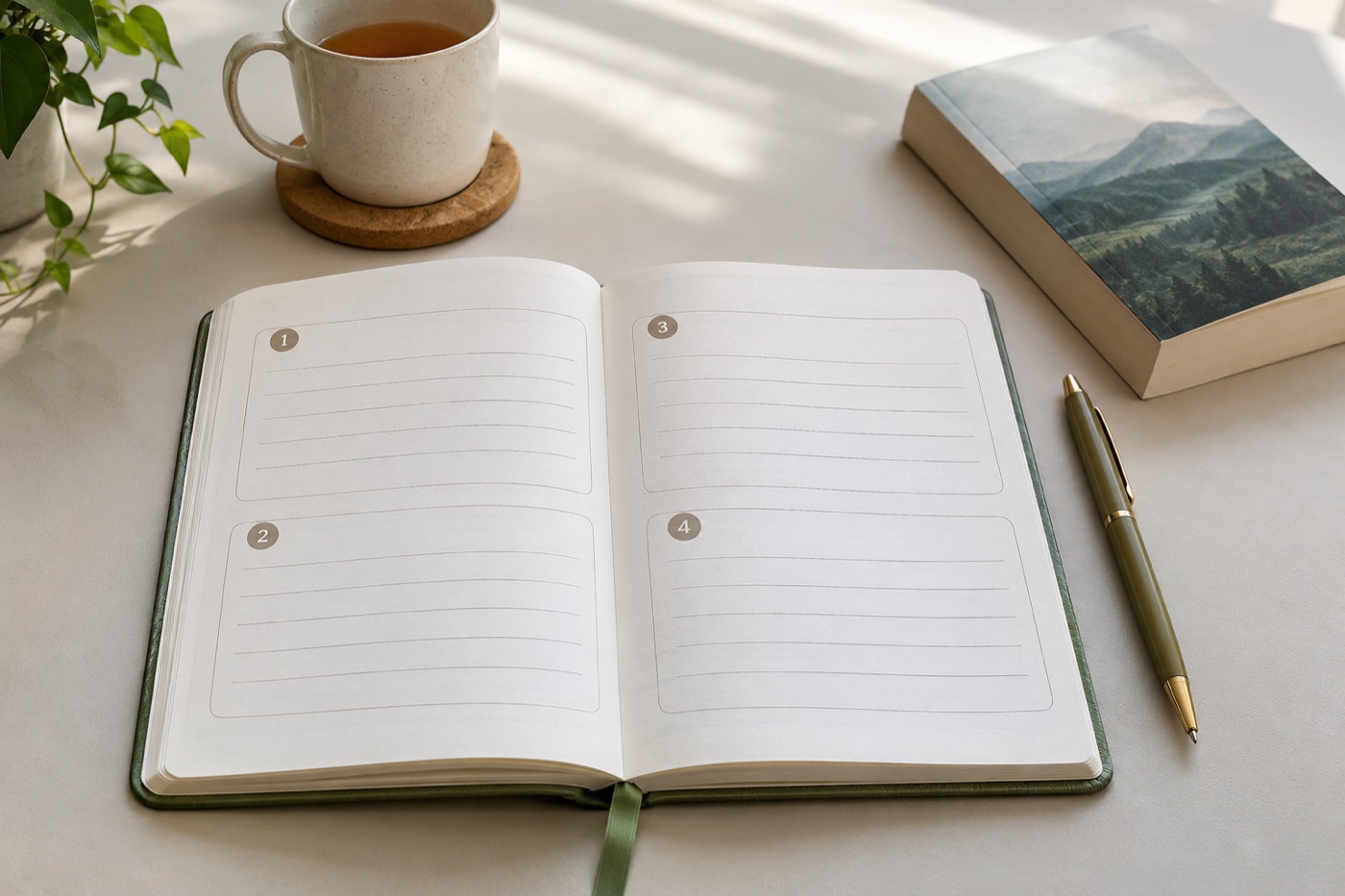
For memory rather than measurement
If your goal is to remember books, write about moments, not totals. Note a sentence that shifted your view, an image that stayed with you, a character decision, a surprising structure, or a question you still carry. Specific details create a stronger route back into the reading than a number of pages or a star rating.
Use your own language. A reading log is not a review for an audience unless you want it to be. Honest shorthand is more useful than polished generalities.
For book-club preparation
Keep a separate area for discussion notes so spoilers do not overwhelm the first impression. Record a passage with its page or location, then add what it made you notice. Write questions that can support different answers rather than prompts that merely ask whether everyone liked the book.
Before a meeting, scan the last few entries and choose two or three observations. A log should reduce preparation time, not require you to reread every note.
Paper, spreadsheet, or notes app?
Paper is calm, visible, and easy to use without a screen. A spreadsheet makes sorting by date, author, format, or subject simple. A notes app supports search, links, voice notes, and a large archive. A hybrid system can work well when quick phone notes become a considered paper entry later.
Choose based on retrieval. Ask where you will look when you want to remember a book next year, not which system looks most impressive today.

Do not turn the log into a streak
A log can quietly become another performance system. If you miss a week, leave the gap. Resume with the next book and add the date you returned. The record remains useful even when it is incomplete. Reading is not less valuable because the documentation is irregular.
Avoid setting a daily entry requirement unless that practice genuinely helps you. The log exists to support reading, not to compete with it.
Use tags and categories sparingly
Tags can help you find books about a subject, mood, place, or format, but too many categories create maintenance work. Start with three or four questions you actually ask: Who wrote this? What kind of experience was it? When would I recommend it? What should I read next?
Let the categories change. Your reading life will develop new interests, and the log should be allowed to change with it.
Keep facts separate from interpretation
Record edition, translator, format, and date as facts. Record your response as interpretation. This distinction helps when you return later or recommend the book to someone else. It also keeps a memory note from becoming an accidental claim about a book’s universal value.
For nonfiction, separate the author’s claim from the evidence you want to verify. For fiction, note what the text shows before deciding what it means.

Review the log without grading yourself
Once a month or season, skim a few entries. Notice recurring subjects, abandoned questions, formats that helped, and books you want to revisit. Do not use the review to calculate whether you read enough. Use it to understand what kind of reading is available and welcome now.
A short review can also guide recommendations. You may discover that your most useful notes are about voice, pace, accessibility, or the conditions in which you read.
Frequently asked questions
What should a reading log include?
Start with title, author, date, format, one specific response, and one question or detail you want to remember.
Is a reading log the same as a journal?
Not always. A log can be brief and chronological; a journal usually leaves more room for reflection.
Should I rate every book?
No. A short explanation often preserves more useful memory than a score.
What if I stop using the log?
Resume with the current book. Do not backfill unless doing so genuinely helps you.
Paper or digital?
Choose the format you will actually reopen and search when you want to remember a book later.
How can I use a log for book clubs?
Keep passages, evidence-based observations, and open questions in a separate discussion area.
Make the next entry easy
Keep the tool where you read, use a consistent first line, and make the smallest entry that will still help you later. Verify dates, edition details, and any library metadata you want to preserve. Then let the record remain imperfect. A useful reading log is a quiet memory system, not another obligation.
Use the log to choose what comes next
A log can become a quiet recommendation engine. After several entries, look for subjects, voices, formats, and reading conditions that recur. You may find that you prefer short books during travel, audio with strong narrators, or reflective essays after a demanding month. These patterns are not rules; they are clues about fit.
Keep a note of the reading conditions
Record where and how you read when that context changes the experience. A book finished during a commute may carry a different memory from one read slowly at home. Time, sound, light, and interruptions are part of the reading life, even if they are not part of the book.
Use a pause entry
If you stop a book, record why without turning it into a judgment. The pace may be wrong, the subject may be mistimed, or the format may create friction. A pause note helps you decide later whether to return, switch editions, or let the book go.
Make the tool accessible to your future self
Use clear titles, consistent dates, and enough context to recognize the book later. If you use a digital system, back up important notes. If you use paper, keep the notebook in a place where you can find it. Memory improves when retrieval is easy.
Share only what you want to share
Your reading log can be private, public, or partly shared. Decide whether you want to publish recommendations, keep personal reactions private, or share selected passages with a group. The most honest notes often need a boundary around them.
Let the log change shape
A system that helped during a reading-heavy month may be too much during a busy season. Remove fields you skip, add fields you repeatedly need, and change formats when your life changes. The tool works when it adapts.
Record the first sentence you want to remember
At the end of a session, write the one thing you would want to tell a friend. It may be a scene, a claim, a mood, or a question. This habit keeps the log connected to lived reading instead of turning it into an inventory.
Use a separate list for unfinished books
Unfinished books are part of the record. Keep them visible without treating them as failures. Note whether you paused, abandoned, or plan to return, and what evidence would make a return worthwhile. This makes future choices more honest.
Keep a recommendation field
At the end of each entry, write who might enjoy the book and under what conditions. Mention pace, voice, subject, or format. A specific recommendation is more useful than a universal claim.
Protect the quietness of the system
If the log begins to feel like an app you have to maintain, simplify it. Remove streaks, targets, or fields that do not support memory. A quiet record can last longer than an ambitious dashboard.
Use the log as a bridge between books
At the end of an entry, note one possible next route: another author, a shorter work, a different format, or a subject that emerged. This turns the log into a bridge instead of a final stop.
Review without counting yourself
Read a few entries each season and notice what made reading possible. That observation is more valuable than a target. Let the record show a life, not a score.
Use the tool lightly
The reading life does not need to become a dashboard. Use the log or quiz when it helps you notice a choice, remember a detail, or move through uncertainty. Skip it when the book itself is enough. A tool is successful when it returns attention to reading instead of asking for attention of its own.
Check the current book details, respect your own boundaries, and keep the next step small. The goal is not a perfect record or a perfect recommendation. It is a more welcoming way back to the page.
Keep the next entry human-sized
One title, one detail, one response, and one question can be enough. If you want more, add it because the book invites more, not because the system demands it. A small record can carry a long memory when it is specific.
Let the archive stay honest
Record pauses, rereads, format changes, and uncertainty when they matter. Those details explain your reading better than a clean list of finished titles.
Let the record support return
When you open the log later, it should give you a way back into the book. Keep the language clear, the details specific, and the system easy enough to use when your attention is elsewhere.
That is the useful measure: does the record help you remember without becoming another obligation?
Check the fit after use
After you use the tool once or twice, notice what it made easier and what it made heavier. Remove steps that do not help, keep the ones that support attention, and allow the setup to change with the season. A reading tool should earn its place quietly.
A reading log succeeds when it helps future you return to the book with less effort. Write the smallest specific note that preserves the memory, then stop. Let the tool support attention rather than compete with it.
Keep the next entry simple, specific, and easy to reopen. A quiet record can carry a long memory when it preserves the detail that mattered.
That is enough to support memory without turning reading into paperwork.
The record should stay light enough to use and specific enough to matter.
Keep it usable.
Return when you need it.
Use it lightly, and let reading remain the main event.
Keep the record useful tomorrow
Useful Sources And Verification
Verify title, author, edition, translator, format, page details, and library metadata through the current publisher or author page, Library of Congress, WorldCat, and a trusted library catalog. This tool article is editorial guidance and does not claim firsthand testing.