
Annotate with a few short notes in your own words, a small set of symbols, and tabs for passages you want to revisit. Mark turning points, questions, and disagreements — not every sentence — and keep a separate notebook for books you cannot mark.
At a glance: eight ways to annotate
Pick one method to start with. The best annotation system is the one you will still use on page 200, not the one that looks most impressive on page 10.
| Method | Best for | Check first |
|---|---|---|
| Margin notes | Capturing your own reaction | Keep them short and in your words |
| Symbols and marks | Finding key passages fast | Use no more than five symbols |
| Tabs and page flags | Marking passages to revisit | Pick a color code and stick to it |
| A separate notebook | Books you do not want to mark | Note the page number every time |
| Digital highlights | Ebooks and searchable notes | Export notes before they pile up |
| Color coding | Separating themes or voices | Limit colors or the code breaks down |
| End-of-chapter summary | Nonfiction and dense books | One idea per chapter, not a transcript |
| Discussion notes | Book club meetings | One passage, one question, one disagreement |
Start with why you are marking
Before you mark anything, decide what the marks are for. A note that helps you remember a book is different from a note that prepares you for a discussion, and both are different from notes for an essay or a project. When the purpose is clear, the marks stay small and useful.
Most readers annotate for one of three reasons: to remember, to discuss, or to return. Remembering needs only a reaction and a page number. Discussing needs a passage and a question. Returning needs a signpost you will understand in six months. Pick one reason for this book and let the rest go.
Choose tools that suit the book
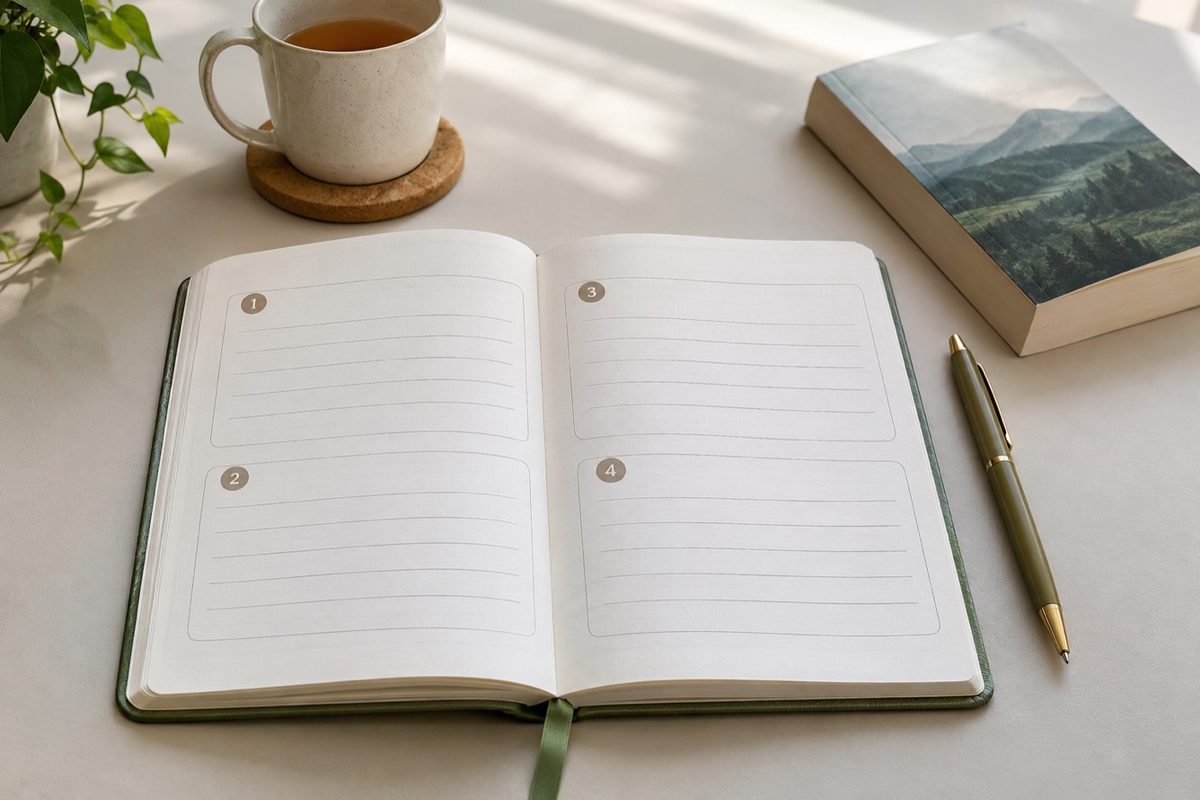
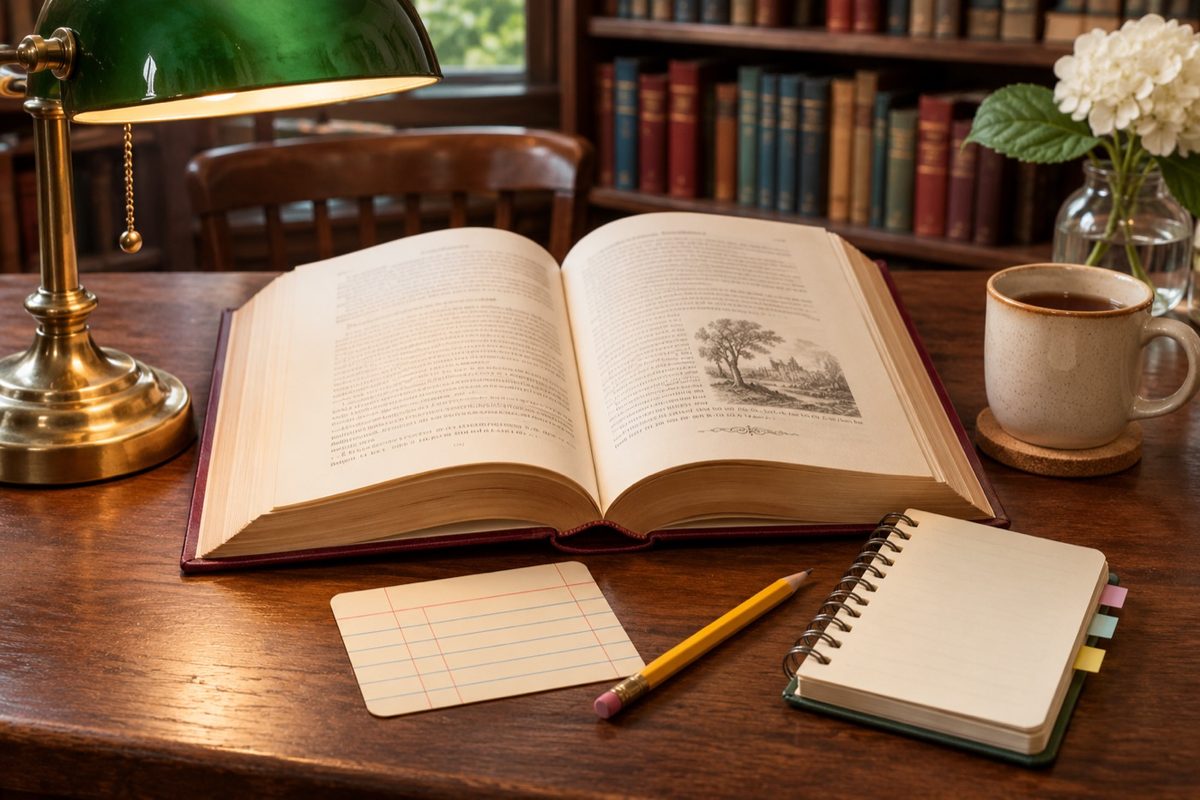
The tool should disappear while you read. A soft pencil suits a paperback you love, because it erases and never bleeds. A fine pen suits a notebook or a journal kept beside the book. Sticky tabs suit a book you share or borrow, because they leave no mark at all.
Do not buy a full annotation kit before you know your habit. Start with whatever is already on your desk and add one tool at a time when a real friction appears. Our guide to reading accessories covers the tools readers actually keep using, and which ones gather dust.

Write margin notes in your own words
A margin note works when it records your thinking, not the book's words. “She is lying to herself here” is more useful than a copied sentence, because it tells your future self what you noticed. Two or three words are often enough: “turning point”, “doubt this”, “like the opening”.
Write notes at natural pauses — the end of a scene, a chapter, or a sitting — rather than after every paragraph. Stopping constantly breaks the reading, and the notes get thinner when you are interrupted. If a passage stops you mid-page, mark it with a tab and write the note when you reach a pause.

Build a small symbol system
A handful of symbols turns a skim back through the book into a quick search. Keep the set small: a star for a passage to quote, a question mark for something you doubt, an exclamation mark for a surprise, and an arrow for a connection to an earlier scene. Five symbols are plenty; ten become a code you have to decode.
Write your key on the inside cover or the first page of your notebook so it survives between books. The same symbols work across fiction and nonfiction, which means the system gets faster the longer you use it. If a symbol stops meaning anything to you, drop it rather than forcing it.

Use tabs for passages you will revisit
Tabs are for finding, not for decorating. Give each color one job — for example, blue for passages to quote, yellow for questions, pink for scenes to discuss — and use them sparingly. A book with forty tabs has no priorities; a book with eight has a map.
Place the tab so a little sticks out at the top or side, and write two or three words on it if the flag is wide enough. When you finish the book, the tabs become your reread list: open each one, read the passage, and decide whether it still matters. Remove the tabs that do not.
Annotate fiction and nonfiction differently
In fiction, annotate movement: what a character wants, what changed between two people, what image keeps returning. Plot summaries are the least useful notes, because the book already contains the plot. Your notes should preserve the shape of the story and your response to it.
In nonfiction, annotate structure: the main claim, the strongest example, and the point where you disagree. One line per chapter is often enough — the claim in your own words, plus a page number. If a chapter has no claim you can state plainly, that is itself a useful note.
Annotating ebooks and audiobooks
On an ereader, highlight less than you think and add a note in your own words to the highlights you keep. A highlight without a note is a sentence you liked once; a highlight with three of your own words is a thought you can reuse. Export your notes regularly, because highlights trapped inside one app are easy to lose.
For audiobooks, do not pause every few minutes. Listen in blocks, then note one timestamp and one sentence when the block ends: what changed, what surprised you, what you want to check later. A voice memo works well here — speak the note while the listening is still fresh, and write it down later if you want it on paper.

Annotate for a book club discussion
Book club annotation has a different goal: conversation, not completeness. Before the meeting, pick one passage to read aloud, one question the book raised for you, and one point where you disagreed with a character or the author. Three items are enough to carry a discussion; thirty will never get used.
Mark the passage with a tab and write the question in the margin or your notebook, so you can find it without flipping. If you are choosing the book itself, our guide to books for book clubs and the notes on starting a book club will help you pick a title with enough to argue about.

What not to mark
Do not mark a sentence only because it sounds beautiful. A book full of beautiful sentences with no notes about why they matter is a collection, not a record. If a line stops you, add three words about what it did: “the turn”, “her voice changes”, “this is the theme”.
Do not annotate a borrowed or library book in ink, and do not mark a book you plan to give away. Sticky tabs and a separate notebook keep the book clean and still give you a full record. The same rule applies to rare or signed editions: enjoy them unmarked, and keep your notes beside them.

Revisit your marks after you finish
A week after finishing, open the book at your tabs and read only the marked passages. Write five lines without looking at your notes first: what the book was about, what changed, what surprised you, what you disagreed with, and who you would recommend it to. Then compare with your notes. The gaps show what your mind kept and what it released.
This short revisit is the part of the system that builds memory. The method pairs well with the approach in our guide to remembering what you read, and a reading journal gives the five lines a permanent home. A note that leads you back into the book has done its job.

Tools that make annotation easier
These are optional. A pencil and a few sticky tabs cover most annotation; the tools below only help if they lower friction for you.
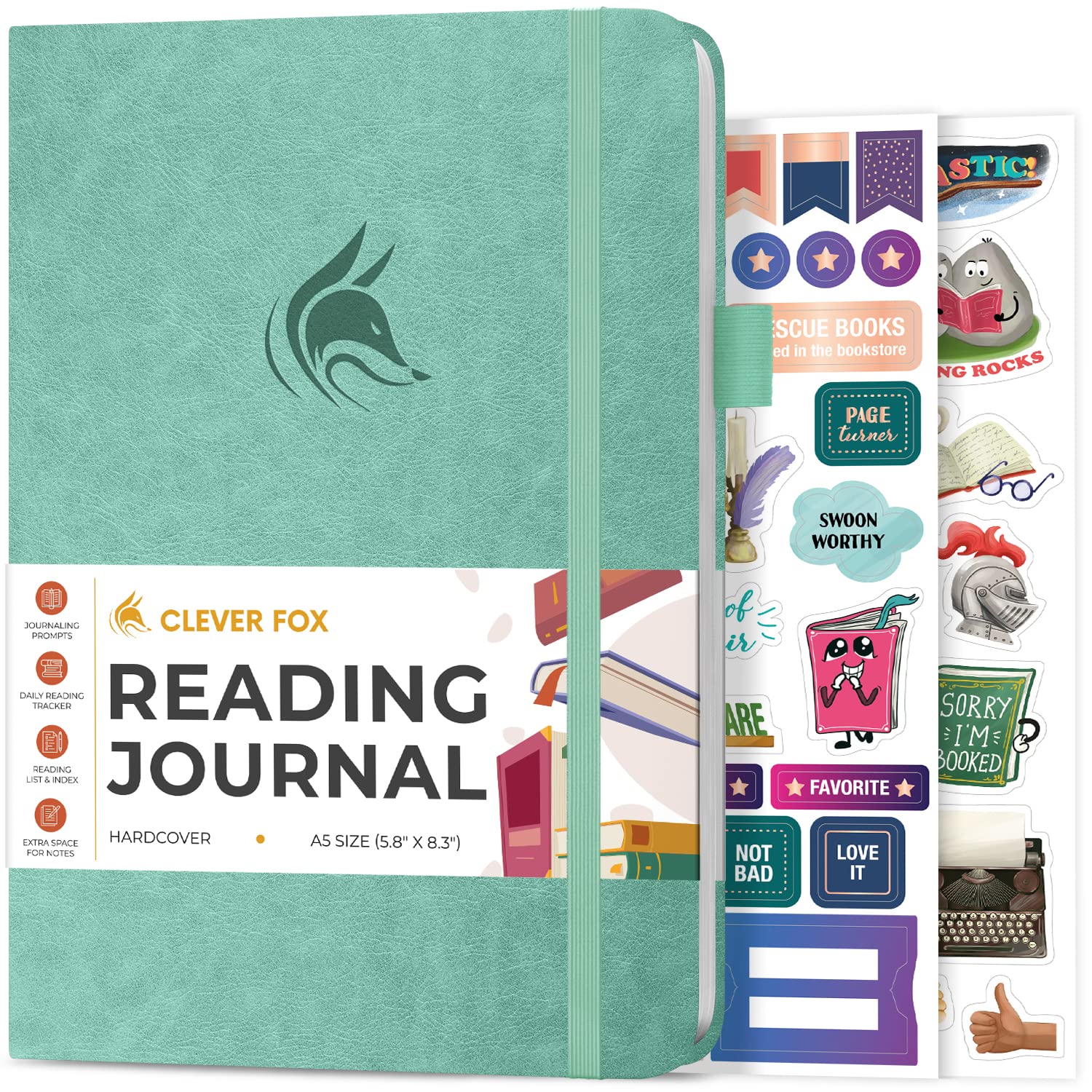
Clever Fox Reading Journal
The current listing describes a 5.8 x 8.3-inch reading journal and book-tracking log. It is a simple place to record your reactions after a few sessions.
View on Amazon ↗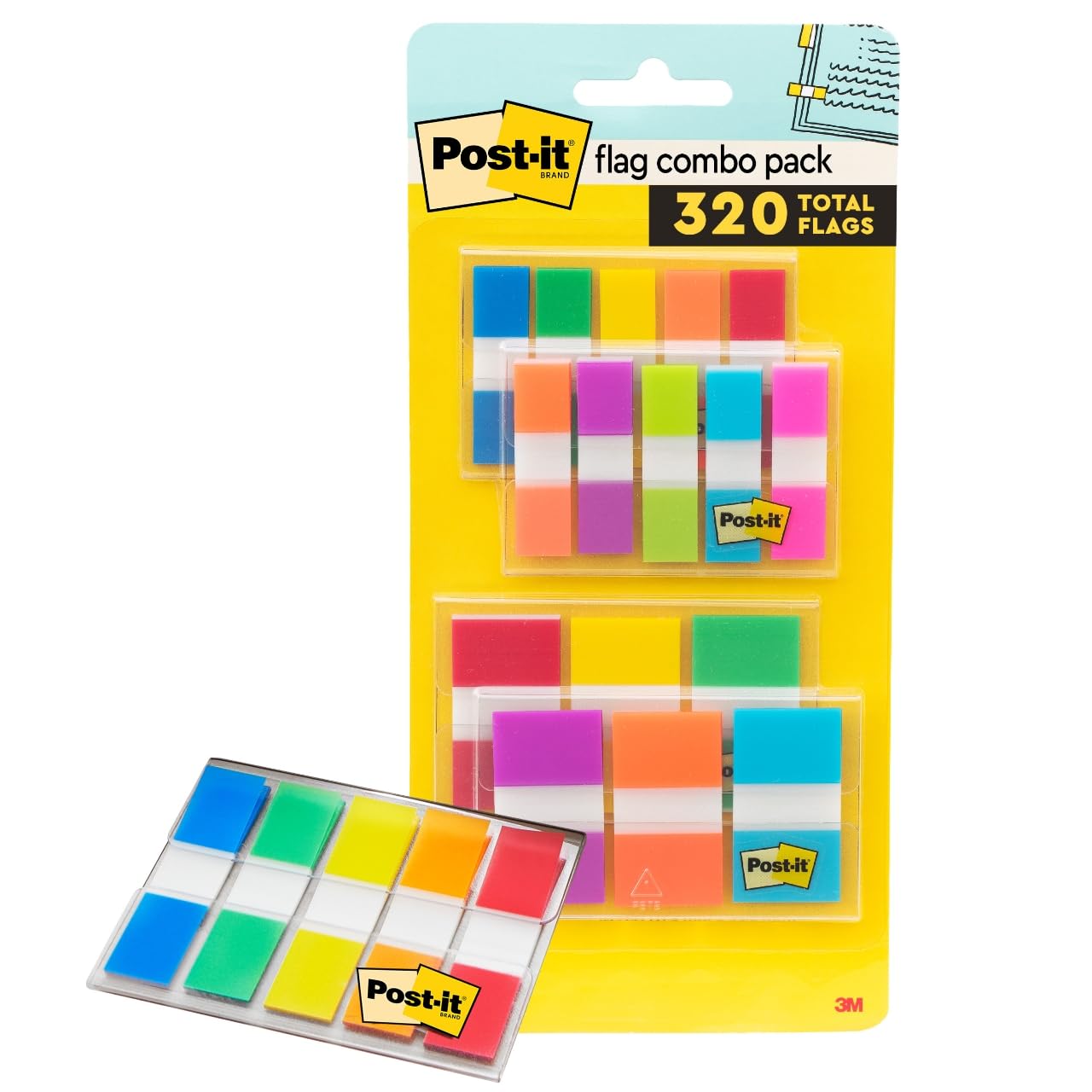
Post-it page flags
Multicolor page flags for marking passages, questions, and discussion points. Check the active pack and dimensions before buying.
View on Amazon ↗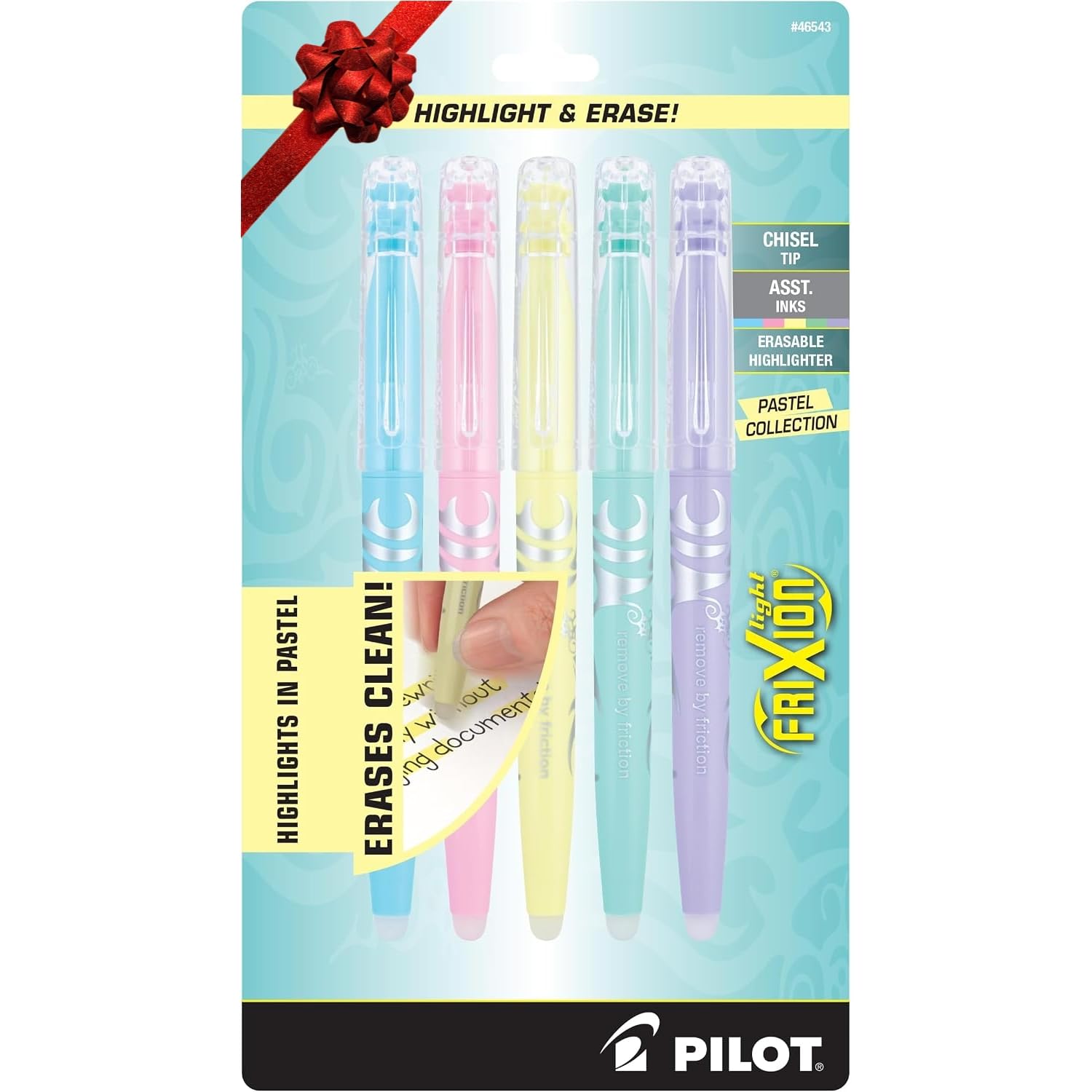
Pilot FriXion erasable highlighters
Erasable highlighters for marking passages without a permanent mark. Check the listing for colors, pack size, and availability.
View on Amazon ↗These are editorially selected examples, not universal recommendations. Re-check the live listing before buying.
Frequently asked questions
Does annotating ruin a book?
No, when it stays light. A few short notes and a small set of symbols add to a book; heavy marking on every page distracts from it. Use a pencil if you want the marks to be reversible.
What is the best pen for annotating books?
A soft pencil is the safest start because it erases and never bleeds through. Fine gel pens work in notebooks and on thicker paper; test any pen on a back page first.
Should I annotate a library book?
No. Never write in a borrowed or library book. Use removable sticky tabs and keep your notes in a separate notebook, with the page number beside each note.
How do I annotate a book I plan to lend or give away?
Keep the book clean and annotate on sticky tabs or in a notebook instead. The next reader gets an unmarked book, and you keep the full record.
Is highlighting enough?
Rarely on its own. A highlight marks a sentence; a short note in your own words records why it mattered. Pair every important highlight with a few words.
How do I annotate nonfiction?
Record the main claim of each chapter in your own words, plus the strongest example and any point where you disagree. One line per chapter is often enough.
What if I annotate too much?
Stop for a chapter and read without marking. When you return, mark only turning points, questions, and disagreements. A book with a few strong marks is more useful than one covered in ink.
Can I annotate on an e-reader?
Yes. Highlight sparingly, add a short note in your own words to the highlights you keep, and export your notes regularly so they are not trapped inside one app.
Key takeaways
- Mark turning points, questions, and disagreements — not every sentence.
- A few short notes in your own words beat a page of copied lines.
- Keep the symbol set small: five marks you remember beat ten you must decode.
- Revisit your marks a week later; five lines then turn marks into memory.
Useful Sources And Verification
This guide is original editorial guidance. For broader library and reading resources, verify details through Library of Congress, American Library Association, and New York Public Library. Books Club does not claim firsthand testing unless a page states it clearly.