Yes, The Frozen River is worth reading if you like historical fiction with a mystery spine. Ariel Lawhon's novel, published by Doubleday on December 5, 2023, follows Maine midwife Martha Ballard in 1789 as a body in the ice and a court case test whose word the town believes.
At a glance: the verdict
The short version first, for readers deciding in under a minute.
| Question | Short answer |
|---|---|
| Is it worth reading? | Yes, a tense and humane historical mystery |
| Is it based on a true story? | Yes, on Martha Ballard's real diary and the 1789 case |
| When is it set? | Maine in 1789, on the frozen Kennebec River |
| How long is it? | 448 pages in the 2023 hardcover; 464 in the 2024 paperback |
| Good for book clubs? | Yes, it was a GMA Book Club Pick |
| Author's other novels? | I Was Anastasia and Code Name Hélène |
What is The Frozen River about?
The Frozen River is a historical mystery set in Maine in 1789, where midwife Martha Ballard is summoned to examine a man's body found frozen in the Kennebec River. Her examination pulls her into a town divided by secrets, status, and a court case that will test what a woman's word is worth.
Lawhon builds the novel around Martha's work: births, illnesses, household visits, and the diary she keeps. That daily record becomes the spine of the story, because Martha notices what powerful men would rather leave unrecorded. Readers who like true stories with a novel's shape may also enjoy The Wager review.

Is The Frozen River based on a true story?
Yes, The Frozen River is inspired by the real Martha Ballard, an 18th-century Maine midwife who kept a diary from 1785 until her death in 1812. Lawhon draws on that diary and on the 1789 case in which Rebecca Foster accused Judge Joseph North, then fills the gaps as a novelist.
The result is historical fiction, not biography: dialogue, motives, and some connective scenes are imagined, while the diary, the trial, and Martha's profession anchor the book in documented history. Lawhon explains her choices in an author's note, so readers can see where record ends and invention begins.

Who is Martha Ballard in The Frozen River?
Martha Ballard is the novel's narrator, a respected midwife and healer in Hallowell who is called on because the town trusts her judgment with bodies, births, and secrets. She is proud of her skill, protective of her patients, and unwilling to soften the truth for men with more power.
That combination makes her a strong detective figure without turning her into a modern sleuth in costume. Her authority comes from work she actually does every day. If you like tracking names and cases as you read, annotating key pages helps in the crowded middle chapters.

Why does Martha's diary matter so much?
Martha's diary matters because it is a written record in a world where women's testimony carries little legal weight. She writes down births, deaths, visits, and observations in plain language, and that habit turns private knowledge into something that can be checked.
Lawhon uses the diary as more than period detail: it is the novel's argument about whose memory counts. Paper remembers without flinching, while people revise. Readers interested in how writing preserves a life will also like how to remember what you read.

Does The Frozen River read like a mystery?
Yes, it reads like a mystery because the body in the ice raises a question the town cannot leave alone: how did this man die, and who benefits from the answer? Lawhon keeps that question moving while the court case and Martha's rounds widen the stakes.
The pace is steady rather than frantic. Chapters alternate between investigation, domestic scenes, and the slow pressure of winter, so the tension comes from accumulating knowledge. It suits readers who want suspense with historical texture, closer to a courtroom drama than a chase thriller.

How accurate is the history in The Frozen River?
The history is grounded in Martha Ballard's real diary and the documented 1789 case, but the novel is a fictionalized version of her life. Lawhon embellishes where the record is silent, and her author's note separates documented fact from invention for readers who want the boundary.
The strongest historical element is the texture of Martha's work: midwifery, healing, and the legal limits placed on women in 1789 Maine. Readers who want the nonfiction account can turn to Laura Thatcher Ulrich's A Midwife's Tale, published in 1989 and based on the same diary.

What should readers know before starting?
Readers should know the novel centers on a rape accusation and trial, and includes childbirth, illness, and death described as part of Martha's work. The tone is serious and respectful rather than sensational, but the court case is central and cannot be skipped.
The book also asks readers to sit with how little protection women had in 1789: Rebecca Foster's accusation against a judge puts her credibility, not only his conduct, on trial. Knowing that in advance helps you pace the hard chapters instead of being ambushed by them.

Is The Frozen River good for book clubs?
Yes, it is an excellent book club pick because it gives a group three debates at once: what happened to the man in the ice, whether Martha should risk her standing, and how a court should weigh a woman's word. It was also a GMA Book Club Pick, so discussion material is easy to find.
The diary raises a fourth question groups love: what does it mean that Martha's plain record survived when so many women's lives did not? Our guide to what makes a good book club book lists the same qualities this novel delivers.

Who should read The Frozen River, and who should skip it?
Readers who like historical fiction with a mystery spine, strong women leads, and courtroom tension should read it first. It also suits fans of Lawhon's earlier novels I Was Anastasia and Code Name Hélène, who will recognize her interest in women written out of history.
Readers who want a fast modern thriller or a light winter romance may find the pace and subject matter heavy. The novel's pleasures are accumulation and moral pressure, not speed. If you are choosing between this and a quicker read, choosing your next book can help you match mood to book.

What is the final verdict on The Frozen River?
The Frozen River is worth reading because it turns a real midwife's diary into a tense, humane mystery about evidence and power. Doubleday published it on December 5, 2023, and it became a New York Times bestseller and an NPR Book of the Year.
The verdict is simple: read it if you want historical fiction that respects its source and still keeps you turning pages. The paperback from Vintage, published November 5, 2024 at 464 pages, is the easiest edition to find for a group read.

Where to get it, and what to read next
Start with Lawhon's novel, then try a true story built from records of another kind.
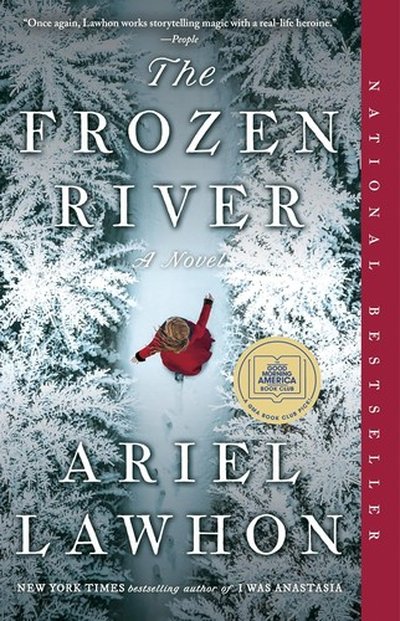
The Frozen River by Ariel Lawhon
Ariel Lawhon's historical mystery of Martha Ballard, the 1789 Maine winter, and the trial that followed a body in the ice.
View on Amazon ↗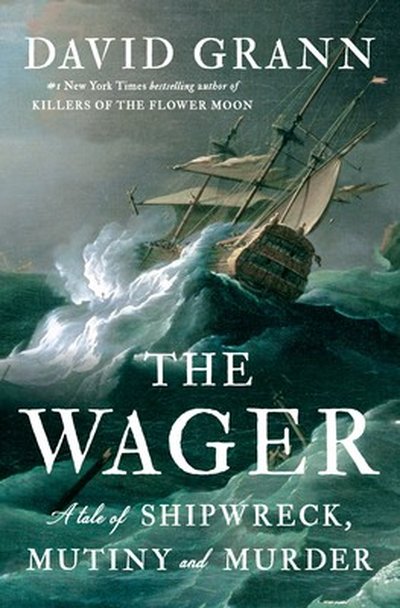
The Wager by David Grann
David Grann's account of the 1741 HMS Wager wreck, the mutiny, and the court martial, for readers who like records turned into narrative.
View on Amazon ↗Both books ask whose written account deserves to be believed.
Frequently asked questions
Is The Frozen River based on a true story?
Yes. It is inspired by the real Martha Ballard, whose diary from 1785 to 1812 survives, and by the 1789 case in which Rebecca Foster accused Judge Joseph North.
Who wrote The Frozen River?
Ariel Lawhon, author of I Was Anastasia and Code Name Hélène. Doubleday published The Frozen River on December 5, 2023.
How long is The Frozen River?
The 2023 Doubleday hardcover is 448 pages. The Vintage paperback, published November 5, 2024, is 464 pages.
Who was Martha Ballard?
Martha Ballard was an 18th-century Maine midwife and healer who kept a detailed diary for 27 years, from 1785 until her death in 1812.
Is The Frozen River a mystery or historical fiction?
It is both: a historical mystery in which a body in the ice and a court case drive the plot through Martha's daily rounds in 1789 Maine.
Does The Frozen River contain difficult content?
Yes. A rape accusation and trial are central, and the novel includes childbirth, illness, and death, handled seriously rather than sensationally.
Is The Frozen River good for book clubs?
Yes. It was a GMA Book Club Pick, and the murder, the trial, and the diary give groups several debates in one book.
What should I read after The Frozen River?
Try A Midwife's Tale by Laura Thatcher Ulrich for the nonfiction account of Ballard's diary, or The Wager for another record-based story.
Key takeaways
- Martha Ballard's real diary anchors the novel's mystery.
- The court case asks whose word counted in 1789 Maine.
- Lawhon's author's note separates record from invention.
- It is a strong pick for historical-fiction book clubs.
Useful Sources And Verification
This guide is original editorial guidance. For broader library and reading resources, verify details through Library of Congress, American Library Association, and New York Public Library. Books Club does not claim firsthand testing unless a page states it clearly.